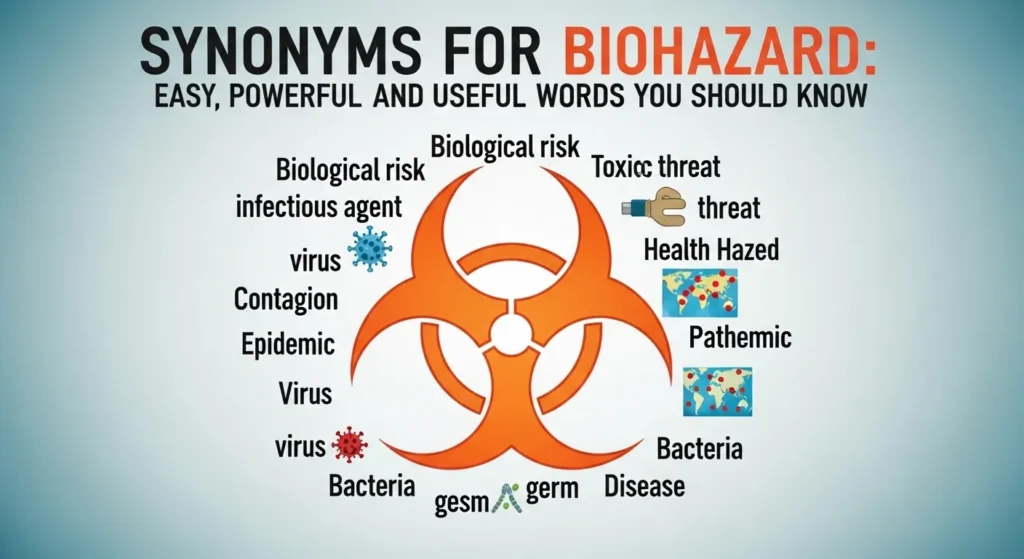

Have you ever seen a warning sign on a lab door or a hospital bin and felt curious or scared? That sign often means dangerous biological material. This is where the word synonyms for biohazard becomes important.
In simple words, biohazard means something harmful that comes from living things, like germs or viruses. Knowing synonyms for biohazard helps you understand science, news, and safety signs better. These words are useful for students, bloggers, content writers, and daily English users. When you learn synonyms for biohazard, your vocabulary becomes stronger and clearer. Let’s explore these words in an easy way.
MAIN CONTENT – SYNONYMS LIST
Biological threat
Meaning: Something living that can harm people. Examples:
- The lab reported a biological threat.
- People stayed away from the area.
H2: Infectious hazard
Meaning: A danger that spreads illness. Examples:
- The waste was an infectious hazard.
- Workers wore gloves and masks.
Toxic organism
Meaning: A living thing that is poisonous. Examples:
- The toxic organism was in the water.
- Scientists studied it carefully.
Contaminated material
Meaning: Something made dirty by germs. Examples:
- The room had contaminated material.
- Cleaners closed the area.
Hazardous biological matter
Meaning: Dangerous living-based material. Examples:
- The box contained hazardous biological matter.
- The staff handled it carefully.
Pathogenic substance
Meaning: Something that causes disease. Examples:
- The sample had a pathogenic substance.
- Doctors warned the public.
Infectious material
Meaning: Material that can spread infection. Examples:
- The hospital stored infectious material.
- Only trained staff touched it.
Dangerous microbes
Meaning: Tiny living things that cause harm. Examples:
- Dangerous microbes were found.
- The lab closed for safety.
Harmful bacteria
Meaning: Bad bacteria that cause illness. Examples:
- Harmful bacteria grew in the food.
- People avoided eating it.
Viral threat
Meaning: Danger caused by a virus. Examples:
- The city faced a viral threat.
- Schools were closed.
Bio-contaminant
Meaning: A biological thing that pollutes. Examples:
- The water had a bio-contaminant.
- People stopped using it.
Biological pollutant
Meaning: Living matter that pollutes air or water. Examples:
- The river had a biological pollutant.
- Fish died quickly.
Infectious agent
Meaning: Something that spreads disease. Examples:
- The doctor found an infectious agent.
- Tests were done fast.
Disease-causing agent
Meaning: Something that makes people sick. Examples:
- The lab identified a disease-causing agent.
- People were warned.
Contagious hazard
Meaning: A danger that spreads easily. Examples:
- The hospital treated a contagious hazard.
- Visitors were limited.
Biological danger
Meaning: Danger from living organisms. Examples:
- The area had biological danger.
- Signs were posted outside.
Medical waste hazard
Meaning: Dangerous waste from hospitals. Examples:
- The bin held medical waste hazard.
- Workers wore protective suits.
Infectious waste
Meaning: Waste that contains germs. Examples:
- The hospital disposed of infectious waste.
- Trucks carried it away.
Toxic biological matter
Meaning: Poisonous living-based material. Examples:
- The lab stored toxic biological matter.
- Safety rules were followed.
Pathogen
Meaning: A tiny thing that causes disease. Examples:
- The pathogen spread quickly.
- Scientists studied it.
H2: Germ threat
Meaning: Danger caused by germs. Examples:
- The school faced a germ threat.
- Students washed hands often.
Biological risk
Meaning: Risk from living organisms. Examples:
- Workers faced biological risk.
- They used protective gear.
Infectious risk
Meaning: Risk of catching a disease. Examples:
- Doctors warned about infectious risk.
- People avoided crowds.
Toxic hazard
Meaning: Danger from poisonous substances. Examples:
- The site was a toxic hazard.
- People stayed away.
Bio-danger
Meaning: Danger from biological sources. Examples:
- The lab reported a bio-danger.
- The area was sealed.
Hazardous pathogen
Meaning: A dangerous disease-causing organism. Examples:
- The sample had a hazardous pathogen.
- Scientists wore masks.
: Infectious toxin
Meaning: Poison that spreads illness. Examples:
- The water contained an infectious toxin.
- People avoided drinking it.
Biological menace
Meaning: A serious biological threat. Examples:
- The city faced a biological menace.
- Emergency teams arrived.
Contamination threat
Meaning: Danger from polluted material. Examples:
- The lab faced a contamination threat.
- Workers cleaned the area.
Infectious pollutant
Meaning: Germ-based pollution. Examples:
- The lake had an infectious pollutant.
- Fish disappeared.
Biological contamination
Meaning: Pollution caused by living organisms. Examples:
- The lab reported biological contamination.
- Tests were done again.
Toxic biological agent
Meaning: A poisonous living-based agent. Examples:
- The lab studied a toxic biological agent.
- Safety rules were strict.
H2: Dangerous pathogen
Meaning: A harmful disease-causing organism. Examples:
- Doctors found a dangerous pathogen.
- Patients were isolated.
Infectious outbreak source
Meaning: The origin of an infection. Examples:
- The market was an infectious outbreak source.
- Authorities closed it.
Biological hazard material
Meaning: Dangerous material from living sources. Examples:
- The container held biological hazard material.
- Labels were bright red.
H2: Toxic microbe
Meaning: A poisonous tiny organism. Examples:
- The soil had a toxic microbe.
- Farmers avoided it.
Harmful pathogen
Meaning: A pathogen that causes damage. Examples:
- The lab identified a harmful pathogen.
- People stayed alert.
Infectious biological substance
Meaning: A living substance that spreads disease. Examples:
- The box contained infectious biological substance.
- Workers handled it carefully.
Biological toxic waste
Meaning: Poisonous waste from living sources. Examples:
- The site stored biological toxic waste.
- Guards watched it.
Bio-risk
Meaning: Risk from biological sources. Examples:
- The lab assessed bio-risk.
- Extra safety steps were taken.
Infectious biohazard
Meaning: A biohazard that spreads infection. Examples:
- The lab found an infectious biohazard.
- The area was locked.
Disease hazard
Meaning: Danger related to disease. Examples:
- The camp faced a disease hazard.
- Doctors arrived quickly.
Biological threat agent
Meaning: An agent that causes biological danger. Examples:
- The report mentioned a biological threat agent.
- Officials investigated it.
Toxic infection source
Meaning: Source of a harmful infection. Examples:
- The well was a toxic infection source.
- People avoided it.
Harmful biological substance
Meaning: A dangerous living-based substance. Examples:
- The lab stored harmful biological substance.
- Warning signs were posted.
Infectious contamination
Meaning: Contamination that spreads disease. Examples:
- The hospital faced infectious contamination.
- Rooms were cleaned deeply.
Biological hazard zone
Meaning: An area with biological danger. Examples:
- The building became a biological hazard zone.
- People were evacuated.
Toxic biological threat
Meaning: A poisonous biological danger. Examples:
- The lab reported a toxic biological threat.
- Authorities acted fast.
Dangerous infection source
Meaning: A place where infection starts. Examples:
- The market was a dangerous infection source.
- It was closed temporarily.
Bio-toxic material
Meaning: Material that is both biological and toxic. Examples:
- The container held bio-toxic material.
- Workers used special tools.
Infectious biological waste
Meaning: Waste that contains infectious organisms. Examples:
- The hospital burned infectious biological waste.
- Safety teams monitored it.
Hazardous biological agent
Meaning: A dangerous living-based agent. Examples:
- The lab studied a hazardous biological agent.
- Scientists wore protective suits.
Contagious biological threat
Meaning: A biological danger that spreads fast. Examples:
- The city faced a contagious biological threat.
- People stayed indoors.
Toxic pathogen
Meaning: A poisonous disease-causing organism. Examples:
- The sample contained a toxic pathogen.
- Researchers handled it carefully.
CONCLUSION
Learning synonyms makes your English stronger and smarter. When you know many words, your writing becomes clearer, your speaking becomes confident, and your ideas sound professional. Using synonyms also helps bloggers and students avoid repetition and improve communication. Practice these words in emails, essays, and daily conversations. With time, your vocabulary will grow fast and naturally.