

You receive a legal notice from a Law Firm Stevenage, and you’ve read the notice three times now, and you still can’t tell what it actually means. Every word looks familiar. None of them are especially long or unusual. And yet somehow, you are not able to understand the real meaning of it.
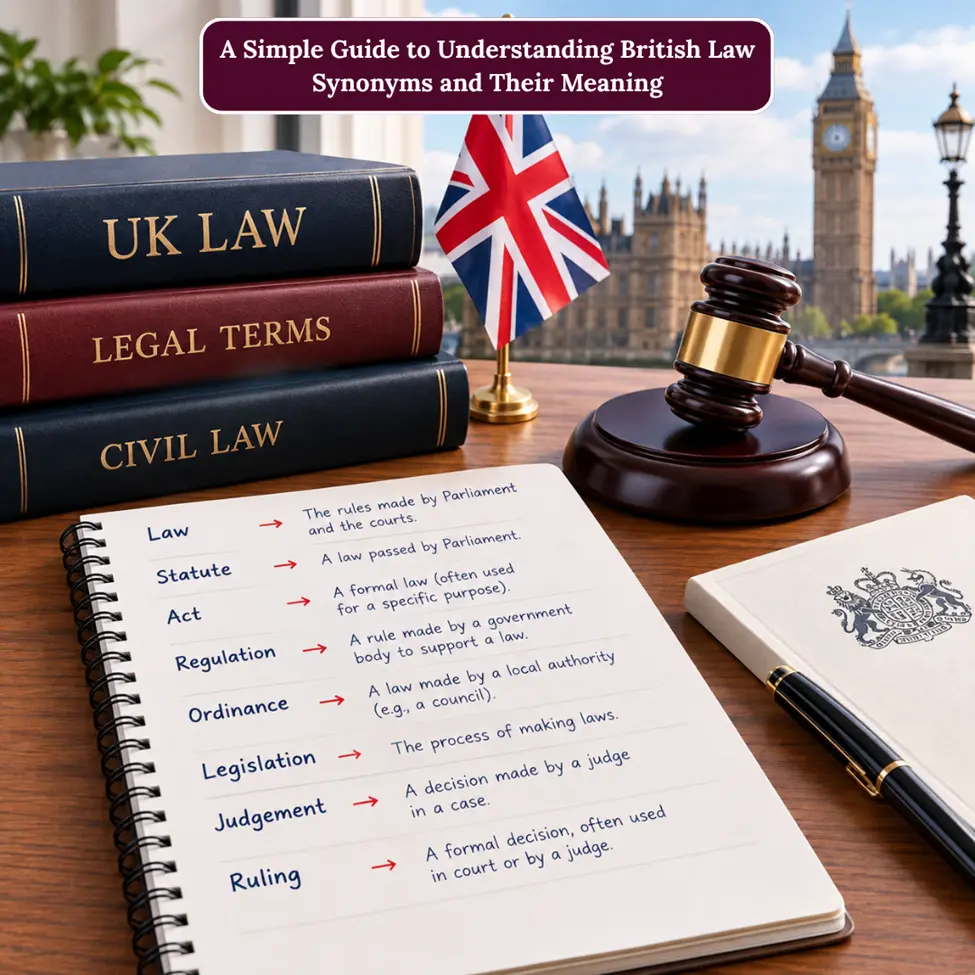
That confusion is one of the most common frustrations people have with British legal language. Words such as “commence”, “obtain” or “pursuant to” aren’t complicated on their own, but legal writing has a habit of dressing up ordinary ideas in unnecessarily formal ones. Understanding British law synonyms and the everyday alternatives to these terms can make a huge difference when you’re trying to work out what a document is actually telling you to do.
This guide walks through the words you’re most likely to come across, translates them into plain English, and explains where the simpler version might not tell the whole story.
Why Is It Important to Know Common British Law Synonyms?
You started a small business six months ago. Things are going well, and then a legal letter arrives from a solicitor’s office. It mentions that their client “intends to commence proceedings” unless you “comply” with an earlier agreement, and that failure to do so may result in a “breach” being pursued through the courts.
You feel a little nervous. Not because you don’t understand English, you clearly do, but because none of this sounds like anything you’d say to a friend over coffee.
This is exactly the moment where knowing common legal synonyms earns its keep. Once you realise that “commence proceedings” simply means “start legal action” and “comply” means “follow the terms you already agreed to”, the legal notice suddenly feels far less like a threat and far more like something you can actually respond to sensibly. You still might need proper advice. But at least you’re not walking into that conversation blind.
Common British Legal Words and Their Everyday Synonyms
These are the words you’ll come across most often in emails from family solicitors, formal notices, or even the small print of everyday agreements. None of them are especially rare in legal writing, and once you know what they mean, you’ll start spotting them everywhere. Here’s a quick rundown before we get into more specific territory like contracts and court paperwork.
Commence – Begin or Start
“Commence” just means “begin”. You’ll see it in phrases like “the tenancy shall commence on 1st October”, which is really just a formal way of saying the tenancy starts on that date.
Terminate – End or Stop
To terminate something is to end it. A contract that’s been “terminated” has simply come to a close, whether that’s because it ran its course or someone brought it to an early end.
Reside – Live
“Reside” means to live somewhere. You’ll spot it on official forms asking where you currently reside. They just want your home address.
Purchase – Buy
Nothing mysterious here. To purchase something is to buy it. Legal documents tend to prefer “purchase” because it sounds more formal, even though “buy” means exactly the same thing.
Obtain – Get or Receive
“Obtain” means to get or acquire something. If a document says you must “obtain consent” before doing something, it means you need to get permission first.
Assist – Help
“Assist” is simply a more formal way of saying “help”. You’ll often see it in employment contracts describing duties, such as an obligation to “assist with reasonable requests”.
Request – To request something is to ask for it. Family Law Solicitors in Stevenage use “request” because it sounds more measured than “please can I have”.
Require – Need
“Require” means to need something or to make something a condition. A divorce solicitorscan ask this while filling the form. If a form says certain documents “are required”, it means you need to provide them.
Inform – Tell or Notify
“Inform” simply means to tell someone something, usually formally. A legal letter that says the council will “inform you in writing” just means they’ll let you know by post or email.
Authorise – Give Permission
To authorise something is to officially allow it. If someone is “authorised to act” on your behalf, they’ve been given formal permission to do so.
These words alone cover a surprising amount of everyday legal ground. Once they start clicking into place, a lot of formal wording becomes far less confusing, and that’s before we even get to contracts.
British Law Synonyms You May Find in Contracts
Contracts are where formal language really piles up. Partly that’s tradition, and partly it’s because contract wording has been refined over decades to avoid ambiguity, even if the result reads like nobody’s actually spoken this way since the 1950s. A simpler word could often do the same job, but the formal version tends to stick around because it’s what everyone in the profession already uses. It’s the same reason an employment lawyer Stevenage clients will often stick to the traditional phrasing in a settlement agreement rather than plain English, even when a simpler term would do just fine.
Amend – Change or Modify
To amend a contract means to change or update part of it, usually through a formal process rather than an informal chat.
Agreement – Arrangement or Understanding
An agreement is essentially an arrangement or understanding between two or more parties, whether that’s written down or verbal.
Obligation – Duty or Responsibility
An obligation is something you’re required to do, a duty you’ve signed up to, whether you feel like it or not.
Comply – Follow or Obey
To comply with something means to follow its rules or terms. If a contract requires you to “comply with health and safety regulations”, it means you must follow them.
Breach – Break or Fail to Follow
A breach happens when someone fails to follow the terms of an agreement, essentially breaking the rules they’d signed up to.
Consent – Permission or Agreement
Consent means giving permission or agreeing to something, often in writing so there’s no confusion later about whether you actually agreed.
Dispute – Disagreement
A dispute is simply a disagreement, though in legal terms it usually refers to one that’s formal enough to need resolving through proper channels.
Remuneration – Pay or Payment
Remuneration means pay. Employment contracts love this word. It sounds more official than “salary”, even though it means the same thing.
Confidential – Private or Secret
Confidential information is private information that shouldn’t be shared, often protected by a specific clause in a contract.
Legal Words Used in British Court Documents

Court paperwork brings its own vocabulary, and it can feel especially worrying because the stakes often feel higher. Receiving a letter that mentions a “claimant”, a “hearing” or “proceedings” can be genuinely worrying if you’ve never dealt with the court system before. It’s often the same worry that leads people to search for immigration solicitors legal aid when they get their first letter from the Home Office. The good news is that most of these terms describe fairly straightforward concepts once you strip away the formality. They’re describing a process that’s involved, what stage it’s at, and what happens next rather than hiding some hidden complexity.
Claimant – Person Bringing a Claim
The claimant is the person or organisation starting the legal case, the one making the complaint or seeking something from the other party.
Defendant – Person Responding to a Claim
The defendant is the person or organisation the claim is being made against. They’re the ones who have to respond.
Proceedings – Legal Case or Process
“Proceedings” refers to the legal case itself or the formal process of taking a matter through the courts.
Hearing – Court Session
A hearing is simply a court session where a case, or part of it, is discussed in front of a judge.
Judgment – Court Decision
A judgment is the court’s official decision on a case, setting out who’s won, who’s lost, and what happens as a result.
Evidence – Information or Proof
Evidence is information or proof presented to support a claim or defence, documents, statements, photographs, or whatever’s relevant.
Summons – Official Notice to Attend Court
A summons is a formal notice requiring someone to attend court, usually as a witness or as a party involved in the case.
Adjourn – Postpone or Delay
To adjourn a hearing means to postpone it to another date, often because more time is needed to prepare or gather evidence.
More Formal Legal Words and Their Simpler Alternatives
Some legal words don’t really carry a special legal meaning at all. They’re just old-fashioned phrasing that’s stuck around out of habit. A good law firm will usually translate these for you rather than leave you guessing. These are often the ones that trip people up the most, purely because they sound so unlike anything anyone would actually say out loud.
Hereby – By This or In This Document
“Hereby” simply means “by this document” or “through this action”. It’s mostly there for formality’s sake.
Thereafter – After That
“Thereafter” just means “after that”, referring to something that happens following a previous event.
Prior to – Before
“Prior to” means “before”. There’s genuinely no difference in meaning, just tone.
Subsequently – Afterwards or Later
“Subsequently” means afterwards or later on, describing something that happened following an earlier point.
Endeavour – Try or Attempt
To endeavour to do something means to try or attempt it, often used to soften a commitment slightly.
Disclose – Reveal or Share
To disclose information means to reveal or share it, typically when there’s a legal or contractual duty to do so.
Deem – Consider or Treat As
“Deem” means to consider or treat something as being the case, even if it isn’t literally true. A useful legal shortcut for assumptions.
Pursuant to – In Accordance With or Under
“Pursuant to” means “in accordance with” or “under”. You’ll see it constantly in official letters, such as “pursuant to Section 21”.
Commencement – Beginning or Start
“Commencement” is the noun form of “commence”, simply the beginning or start of something, such as a contract or tenancy.
Cease – Stop or End
‘To cease doing something’ means ‘to stop or end it’ and is often used in formal notices demanding that an activity stop immediately.
For more legal terms, please read our guide.
When Should You Get Legal Advice?
If a document affects your tenancy, your job, your finances, or involves any kind of court deadline, it’s worth speaking to a solicitor rather than relying purely on a plain-English translation. A good rule of thumb: if getting it wrong would cost you money, time, or your home, get it checked properly.
Conclusion
Legal English doesn’t have to feel like a locked door. Once you know that “commence” means begin, “terminate” means end, and “pursuant to” simply means “under”, a lot of formal wording stops feeling like a foreign language and starts feeling like ordinary English wearing a suit.
But there’s a line worth remembering. Knowing a synonym tells you roughly what a sentence means. It doesn’t always tell you what a document requires you to actually do or what happens if you get it wrong. That’s the gap between a plain-English guide and proper legal advice, and it’s a gap worth respecting, especially when a document touches your home, your job or your money.
If you’ve received a legal letter, contract or court notice and you’re still not sure what it means for your specific situation, it’s worth having a proper conversation rather than guessing. Foster Legal Solicitors regularly help people make sense of exactly this kind of paperwork, translating formal wording into clear next steps you can actually act on.
Also Read
- /common-misconceptions-about-criminal-defense-attorneys/
- /mastering-the-1xbet-color-prediction-game-a-comprehensive-guide-for-indian-players/
- top-10-ethical-hacking-institutes-in-mumbai-courses-curriculum-comparison/