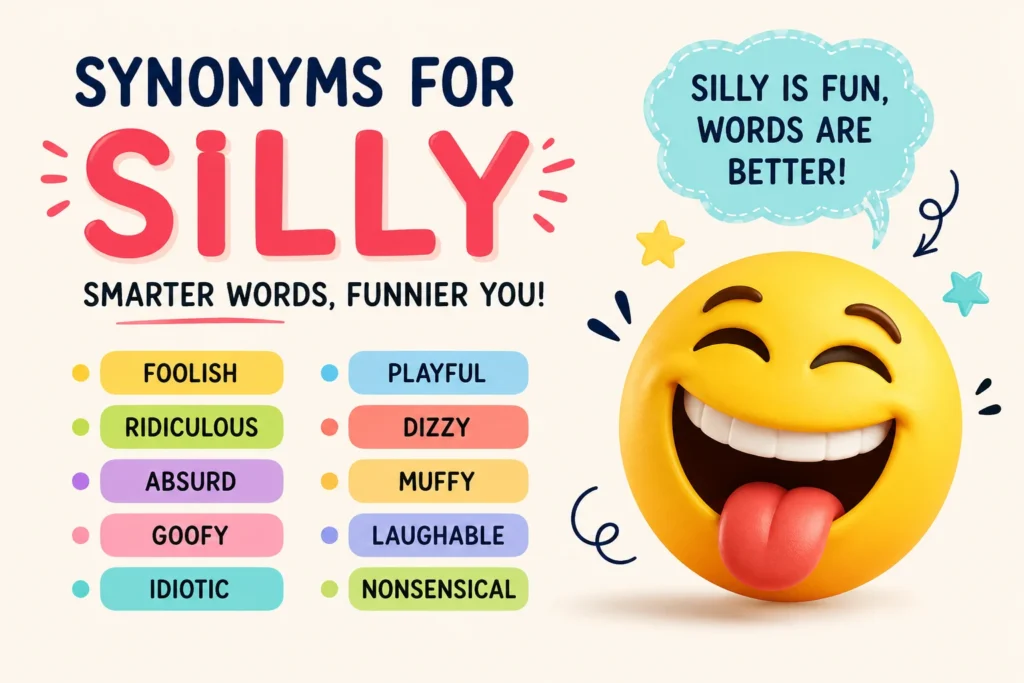
Looking for a synonym for “silly” that sounds just right? The best alternative depends on what you mean: foolish can describe poor judgment, goofy adds a playful or humorous tone, ridiculous suggests something unreasonable or absurd, while childish can imply immature behavior.
Other alternatives, such as foolish, goofy, absurd, ridiculous, ludicrous, frivolous, and nonsensical, can work in different contexts, but they are not interchangeable in every sentence. “Silly” itself is unusually flexible—it can describe a harmless joke, a foolish mistake, an unreasonable idea, or playful behavior.
That means choosing the right synonym isn’t just about finding another word; it’s about matching the meaning, intensity, and tone you want. This guide explores the best synonyms and alternatives for “silly”, with clear meanings, context-based examples, tone notes, and practical guidance to help you choose the right word.
Foolish
Meaning: Foolish means showing poor judgment or not thinking carefully.
Tone: Negative but common and less harsh than “stupid.”
Examples:
- It was foolish to ignore the warning.
- He made a foolish choice before the trip.
Stupid
Meaning: Stupid means showing very poor judgment, understanding, or sense.
Tone: Informal and often harsh when used about a person.
Examples:
- I made a stupid mistake on the form.
- It was stupid to leave my phone outside.
Goofy
Meaning: Goofy means funny, silly, or slightly awkward in a friendly way.
Tone: Informal, playful, and usually mild.
Examples:
- My brother made a goofy face for the camera.
- She wore a goofy hat to the party.
Absurd
Meaning: Absurd means completely unreasonable or so silly that it makes little sense.
Tone: Neutral to negative and useful in formal writing.
Examples:
- The idea of flying without wings sounds absurd.
- His excuse was so absurd that we laughed.
Ridiculous
Meaning: Ridiculous means extremely silly, unreasonable, or hard to take seriously.
Tone: Strong and often negative.
Examples:
- That price is ridiculous for such a small bag.
- His excuse sounded ridiculous to everyone.
Ludicrous
Meaning: Ludicrous means extremely foolish or unreasonable.
Tone: Strong, formal, and often used for emphasis.
Examples:
- It would be ludicrous to walk there in five minutes.
- The rule seemed completely ludicrous.
Preposterous
Meaning: Preposterous means so unreasonable or foolish that it is hard to believe.
Tone: Strong and more formal.
Examples:
- His claim was completely preposterous.
- It is preposterous to blame the dog for the weather.
Nonsensical
Meaning: Nonsensical means having little or no sense.
Tone: Neutral to negative and useful in writing.
Examples:
- The final part of the story was nonsensical.
- His answer sounded nonsensical to the teacher.
Senseless
Meaning: Senseless means lacking a good reason or purpose.
Tone: Negative and serious.
Examples:
- Starting a fight over a seat was senseless.
- The damage seemed completely senseless.
Irrational
Meaning: Irrational means not based on clear or sensible thinking.
Tone: Neutral to formal.
Examples:
- His fear of harmless insects seemed irrational.
- It was irrational to cancel the trip over a small delay.
Unreasonable
Meaning: Unreasonable means not fair, sensible, or practical.
Tone: Neutral and useful in everyday or formal English.
Examples:
- That deadline is unreasonable for a small team.
- It was unreasonable to expect an instant reply.
Unwise
Meaning: Unwise means not showing good judgment.
Tone: Polite and less harsh than “stupid.”
Examples:
- It would be unwise to drive in heavy rain.
- Ignoring the advice was an unwise choice.
Imprudent
Meaning: Imprudent means not careful enough when making a decision.
Tone: Formal and usually negative.
Examples:
- Spending all your savings was imprudent.
- His imprudent decision caused extra work.
Injudicious
Meaning: Injudicious means showing poor judgment in a decision or action.
Tone: Formal and best suited to serious writing.
Examples:
- The manager made an injudicious decision.
- His injudicious comment created tension.
Idiotic
Meaning: Idiotic means extremely foolish or lacking good sense.
Tone: Very negative and insulting when used about a person.
Examples:
- Leaving the oven on was an idiotic mistake.
- He admitted that the plan was idiotic.
Moronic
Meaning: Moronic means extremely stupid or foolish.
Tone: Very harsh and insulting.
Examples:
- He called the idea moronic during the argument.
- Forgetting the tickets was a moronic mistake.
Asinine
Meaning: Asinine means extremely foolish or stupid.
Tone: Strong and often insulting.
Examples:
- That was an asinine thing to suggest.
- The rule sounds asinine to many workers.
Fatuous
Meaning: Fatuous means foolish and lacking serious thought.
Tone: Formal and usually negative.
Examples:
- His fatuous remark ended the discussion.
- The article made several fatuous claims.
Inane
Meaning: Inane means silly, empty, or lacking useful thought.
Tone: Negative and somewhat formal.
Examples:
- We were tired of his inane comments.
- The show was filled with inane jokes.
Puerile
Meaning: Puerile means childish and not suitable for a mature person.
Tone: Formal and negative.
Examples:
- His puerile jokes annoyed the audience.
- The debate became puerile very quickly.
Childish
Meaning: Childish means behaving in a way that seems too young or immature.
Tone: Usually negative, especially for adults.
Examples:
- Their argument became childish.
- It was childish to refuse to say sorry.
Immature
Meaning: Immature means not showing the level of behavior expected from a mature person.
Tone: Negative but common and less harsh than “idiotic.”
Examples:
- His immature reaction surprised the team.
- She apologized for her immature comment.
Juvenile
Meaning: Juvenile means childish, immature, or lacking maturity.
Tone: Formal and usually negative.
Examples:
- The discussion turned into a juvenile argument.
- His juvenile jokes were not suitable for the event.
Synonyms for Desperate: 65+ Words for Frantic & Eager
Infantile
Meaning: Infantile means extremely childish or immature.
Tone: Formal and strongly negative.
Examples:
- His infantile behavior upset the group.
- The complaint sounded infantile and unhelpful.
Frivolous
Meaning: Frivolous means not serious, useful, or important.
Tone: Neutral to negative and common in formal writing.
Examples:
- She spent money on frivolous items.
- The court rejected the frivolous claim.
Trivial
Meaning: Trivial means not important or worth much attention.
Tone: Neutral and useful in formal English.
Examples:
- They argued over a trivial detail.
- The mistake was small and trivial.
Flippant
Meaning: Flippant means treating a serious subject as if it is not important.
Tone: Usually negative.
Examples:
- His flippant reply upset his manager.
- Do not make flippant comments about the accident.
Facetious
Meaning: Facetious means making jokes about something serious instead of giving a serious answer.
Tone: Usually negative or critical.
Examples:
- I thought he was being facetious about the deadline.
- Her facetious answer did not help the discussion.
Jocular
Meaning: Jocular means cheerful and fond of making jokes.
Tone: Friendly and slightly formal.
Examples:
- His jocular mood made the meeting easier.
- She made a jocular comment about the long queue.
Playful
Meaning: Playful means fun, light, and not serious.
Tone: Positive and friendly.
Examples:
- The puppy gave me a playful jump.
- She sent a playful message to her friend.
Mischievous
Meaning: Mischievous means enjoying harmless trouble, jokes, or playful acts.
Tone: Usually playful and mild.
Examples:
- The mischievous child hid his sister’s shoes.
- Her mischievous smile revealed the prank.
Impish
Meaning: Impish means playfully naughty or mischievous.
Tone: Friendly and often humorous.
Examples:
- He gave me an impish grin.
- The child had an impish look after the prank.
Droll
Meaning: Droll means amusing in a strange or dry way.
Tone: Usually positive and somewhat literary.
Examples:
- His droll comment made everyone smile.
- She has a droll sense of humor.
Comical
Meaning: Comical means funny or amusing.
Tone: Neutral and friendly.
Examples:
- His surprised face was comical.
- The mix-up became comical after we understood it.
Humorous
Meaning: Humorous means funny or likely to make people laugh.
Tone: Positive and suitable for formal or casual writing.
Examples:
- She wrote a humorous story for class.
- His humorous reply made the room smile.
Amusing
Meaning: Amusing means funny enough to make someone smile or laugh.
Tone: Positive and polite.
Examples:
- He told an amusing story at dinner.
- The video was short but amusing.
Wacky
Meaning: Wacky means funny, unusual, and slightly silly.
Tone: Informal, playful, and positive.
Examples:
- The show had some wacky characters.
- She came up with a wacky idea for the party.
Synonyms for Vital: 50+ Words for Essential & Crucial
Zany
Meaning: Zany means amusingly strange or silly.
Tone: Informal and playful.
Examples:
- The comedian has a zany style.
- We laughed at his zany dance.
Kooky
Meaning: Kooky means strange or unusual in a funny and harmless way.
Tone: Informal and usually mild.
Examples:
- Our neighbor has some kooky habits.
- She bought a kooky lamp for her room.
Nutty
Meaning: Nutty means strange or silly in a playful way.
Tone: Informal and usually humorous.
Examples:
- My uncle has some nutty ideas.
- We watched a nutty comedy after dinner.
Daft
Meaning: Daft means silly or foolish.
Tone: Informal, especially common in British English.
Examples:
- That was a daft thing to say.
- I felt daft after forgetting the address.
Dopey
Meaning: Dopey means silly, slow, or not very alert.
Tone: Informal and usually playful.
Examples:
- I made a dopey mistake with the schedule.
- His dopey grin made everyone laugh.
Dippy
Meaning: Dippy means slightly silly or not very sensible.
Tone: Informal and usually mild.
Examples:
- My aunt can be a little dippy sometimes.
- He gave me a dippy smile after the mistake.
Whimsical
Meaning: Whimsical means playful, imaginative, and pleasantly unusual.
Tone: Positive and often creative.
Examples:
- The artist created a whimsical painting.
- The children loved the book’s whimsical world.
Quirky
Meaning: Quirky means unusual in an interesting or amusing way.
Tone: Usually positive or neutral.
Examples:
- She has a quirky fashion style.
- The café has a quirky name.
Eccentric
Meaning: Eccentric means behaving or thinking in an unusual way.
Tone: Usually neutral and sometimes positive.
Examples:
- The artist was known for his eccentric style.
- His eccentric habits made him memorable.
Odd
Meaning: Odd means unusual or different from what is normal.
Tone: Neutral and very common.
Examples:
- He asked an odd question during lunch.
- I heard an odd noise outside.
Strange
Meaning: Strange means unusual, unfamiliar, or unexpected.
Tone: Neutral and very common.
Examples:
- That was a strange thing to say.
- We saw a strange object near the road.
Bizarre
Meaning: Bizarre means very strange or unusual.
Tone: Strong and often used for surprising situations.
Examples:
- He told us a bizarre story.
- The movie had a bizarre ending.
Laughable
Meaning: Laughable means so silly or unreasonable that it deserves to be laughed at.
Tone: Strong and often negative.
Examples:
- His excuse was almost laughable.
- The claim sounded laughable to the entire team.
How to Choose the Right Synonym for Silly
The best synonym depends on what you want to say.
- Use goofy for friendly, funny behavior.
- Use playful for light and fun behavior.
- Use foolish for poor judgment.
- Use ridiculous for something extremely unreasonable.
- Use absurd when something makes little sense.
- Use childish for immature behavior.
- Use quirky for an unusual but interesting person or thing.
- Use wacky or zany for funny and unusual ideas.
- Use humorous or amusing when you simply mean funny.
- Use flippant when someone treats a serious topic too casually.
Be careful with strong words such as stupid, idiotic, moronic, and asinine. They can sound rude or insulting, especially when describing a person. For professional emails and academic writing, softer choices such as unwise, foolish, unreasonable, or frivolous are often better.
Synonyms for Silly by Tone
Friendly and Playful
Goofy, playful, mischievous, impish, wacky, zany, kooky, whimsical, and quirky can work well when you want a light or friendly tone.
Neutral or Formal
Foolish, absurd, unreasonable, unwise, imprudent, irrational, nonsensical, and frivolous are useful when you want a more neutral or formal style.
Strong or Negative
Stupid, idiotic, moronic, asinine, ridiculous, ludicrous, and preposterous can sound much stronger.
Best for Academic Writing
For essays and formal assignments, consider foolish, irrational, unreasonable, imprudent, injudicious, nonsensical, frivolous, or absurd, depending on the meaning.
Conclusion
Learning synonyms for silly gives you more control over your English. You can use “goofy” for friendly humor, “foolish” for poor judgment, or “absurd” for something that makes no sense. These small word choices can improve writing, blogging, speaking, and everyday communication. Practice new words in emails, essays, social posts, and daily conversations. The more you use them, the easier it becomes to choose the right word for every situation.

Evan Blake creates powerful, research-backed synonym resources, guiding readers to communicate smarter, clearer, and more effectively every day.