

You’ve finally found the perfect saree. Maybe it’s a Banarasi your mother sent from home, or a Kanjeevaram you picked up on your last trip to India. Then comes the question every saree lover in America eventually faces: who’s going to stitch the blouse?
Back home, you’d walk to the neighbourhood tailor, get measured in five minutes, and pick up a perfect blouse a week later. In the USA, it’s not that simple. Desi tailors are scattered, wait times stretch for weeks before Diwali and wedding season, and a regular alterations shop rarely understands darts, katoris or a deep-back cut.
The good news? Getting a beautifully fitted sleeveless saree blouse in the US is completely doable once you know your options. Here’s a practical guide.
1. Why the Blouse Makes (or Breaks) Your Saree
A saree drapes forgivingly. A blouse does not. It sits right at the shoulders, bust and back, exactly where people look first in photos.
A well-cut blouse lets the pallu fall cleanly, keeps straps hidden, and lets you lift your arms to dance at the sangeet without the fabric riding up. A poorly fitted one gapes at the neckline, pulls across the back, and turns an $800 silk into something that looks borrowed.
That’s why it’s worth planning the blouse with as much care as you chose the saree.
2. Your Stitching Options in the USA
4 Ways to Get a Saree Blouse Stitched in the US
Choose the option that best suits your fit, budget and occasion.
1. Local Desi Tailor or Boutique
Best for in-person fittings
Ideal if you prefer trying on the blouse and discussing the fit directly with a tailor.
Watch out: Long queues before Diwali and wedding season.
2. Regular Alterations Shop
Best for simple adjustments
A practical choice for taking in side seams, shortening a blouse or making basic fit corrections.
Watch out: Some shops may lack experience with darts, katori cups and Indian necklines.
3. Online Custom Stitching Service
Best for busy schedules
Convenient if you live far from an Indian tailor or prefer arranging stitching from home.
Watch out: Accurate body measurements and clear design instructions are essential.
4. Designer Label or Made-to-Measure Blouse
Best for weddings and special occasions
A good option when you want the blouse design, fabric, detailing and finish to complement your saree.
Watch out: Usually more expensive than stitching at a neighbourhood tailor.
If you live near a large South Asian community, you’re in luck. Fremont and Sunnyvale in the Bay Area, Hillcroft in Houston, Edison in New Jersey and Devon Avenue in Chicago all have boutiques that stitch everything from simple cotton blouses to heavily worked bridal pieces.
Outside those pockets, online services and designer labels are often the most reliable choice.
3. How to Take Accurate Measurements at Home
Whether you go online or simply want to email your tailor, good measurements are 80% of a good fit. Ask a friend to help, wear the bra you’ll wear with the saree, and use a soft cloth tape.
- Bust: around the fullest part, tape level all the way round.
- Under-bust: just below the bust line, snug but not tight.
- Waist (blouse length point): where you want the blouse to end.
- Shoulder: from one shoulder tip to the other, across the back.
- Blouse length: from the highest shoulder point down to where it ends at the front.
- Front and back neck depth: from the base of the neck straight down to your preferred depth.
- Armhole: around the arm where it meets the shoulder.
- Sleeve length and sleeve round: from the shoulder tip down, plus the round where the sleeve ends.
Pro tip: The easiest shortcut is to send your best-fitting blouse along with your order. Most experienced tailors can copy its fit almost exactly.
4. Choosing Your Blouse Design
Decide the design before you hand over the fabric. Changing your mind mid-stitch usually means wasted fabric or extra charges.
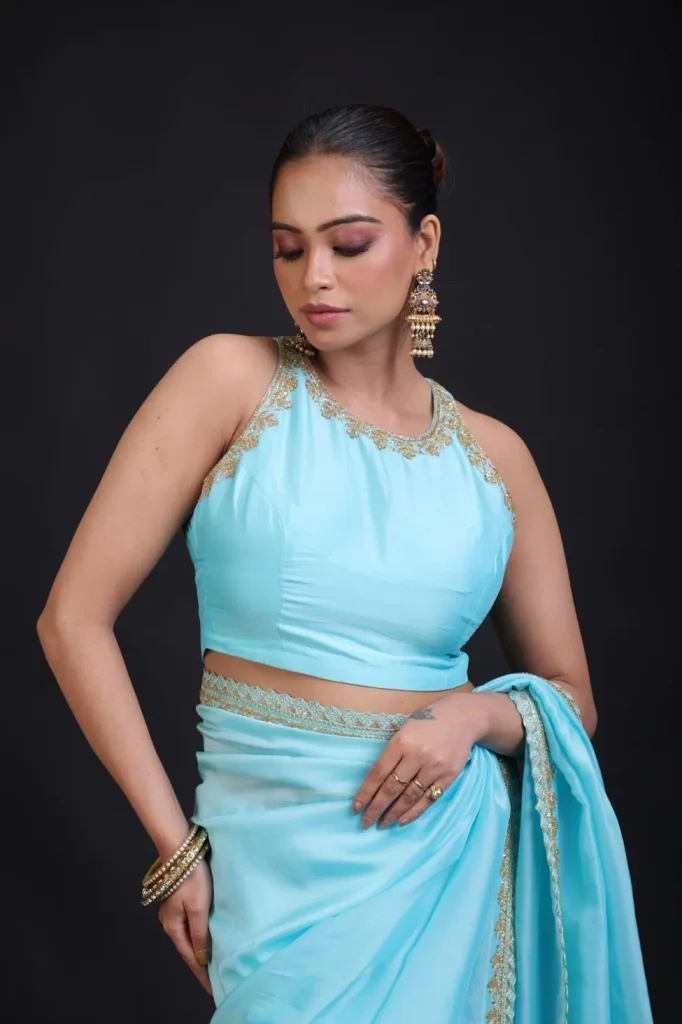
- Neckline: A round or sweetheart neck is timeless. Boat necks suit heavy silks, while a high collar pairs beautifully with Banarasi weaves.
- Back: Deep U, keyhole, dori ties with tassels, or a modest closed back for long ceremonies.
- Sleeves: Short and elbow-length are the most versatile. Three-quarter sleeves work well for cooler fall and winter events.
- Padding and lining: Ask for built-in cups if you want to skip a separate bra. Always ask for cotton lining with silk, net or tissue fabrics.
- Closure: Front hooks are traditional. Side or back zips give a cleaner front for embroidered blouses.
- Margins: Ask your tailor to leave an inch of extra seam allowance so the blouse can be let out later.
5. Ordering Online or From a Designer Label
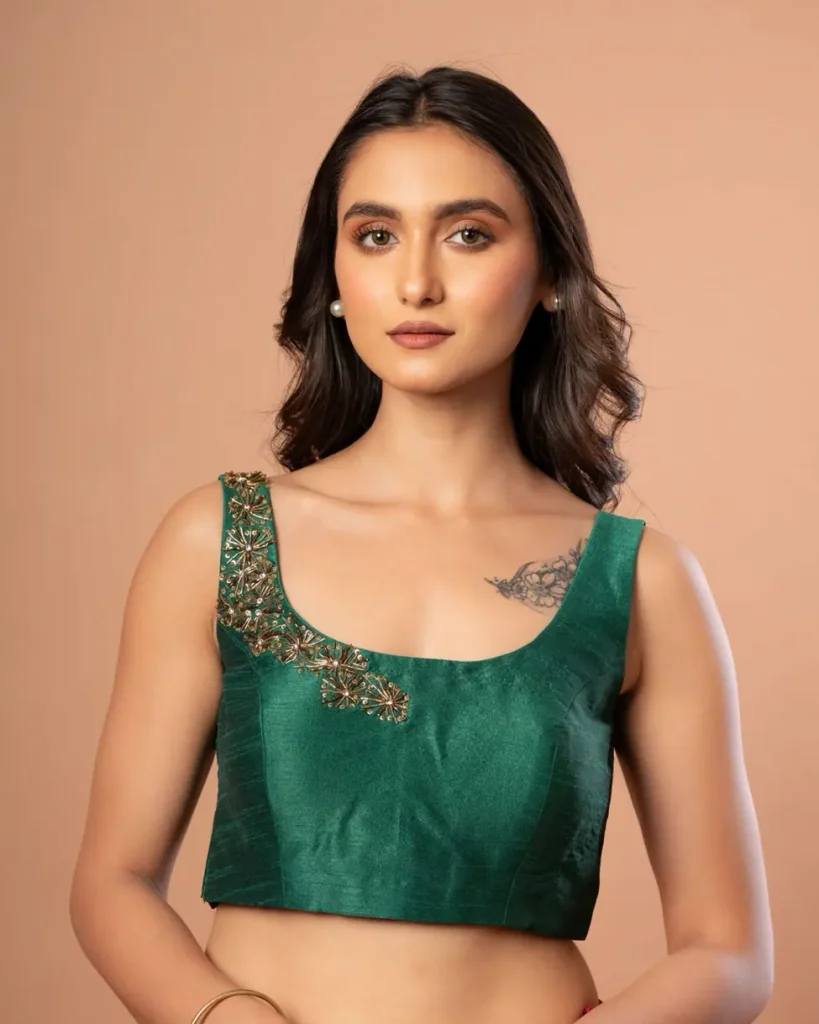
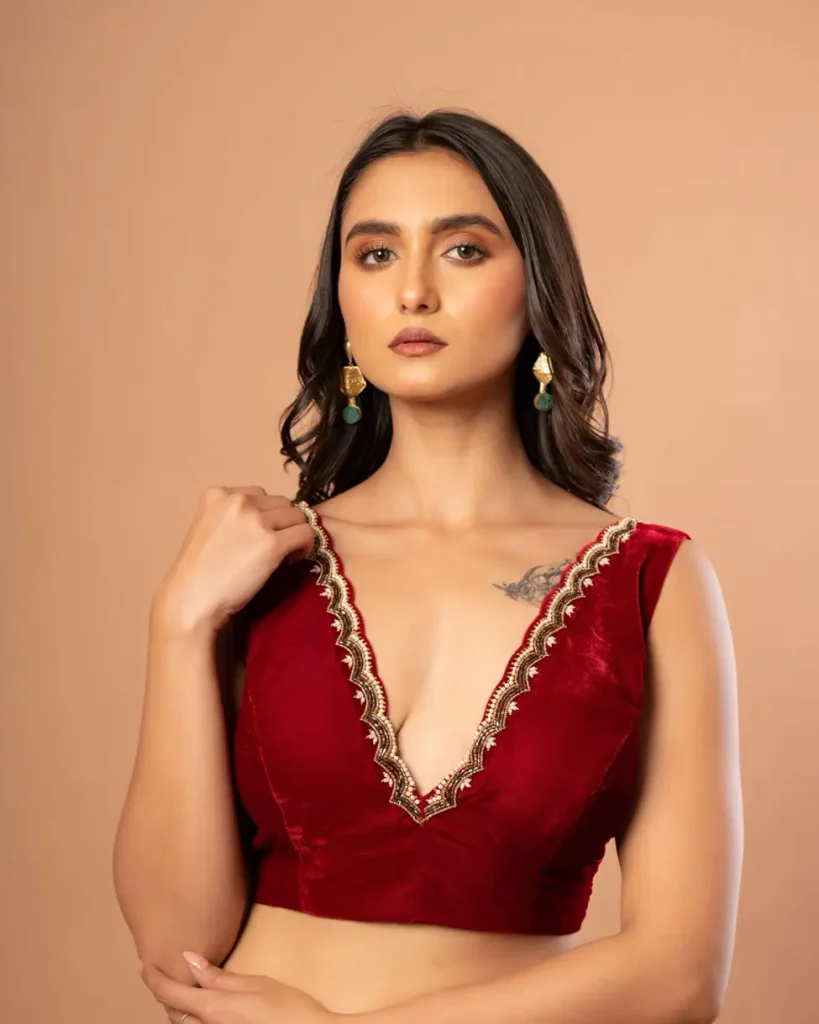
For many women in the US, the simplest route skips the tailor hunt altogether: buy from a label that understands Indian silhouettes and offers ready or made-to-measure blouses.
Before you order, check four things:
- A detailed size chart with blouse-specific measurements, not just S, M and L.
- Real fabric and work details, such as the type of silk, zari or embroidery, and whether it’s lined.
- Alteration or exchange policy, in case the fit needs a small tweak.
- US-based support, so you aren’t waiting on international shipping for every question.
One label worth knowing is Anvi Couture, a Fremont, California brand founded by Kolkata-born designer Pranati Sur. Its collections bring Indian craft, including Banarasi sarees, to women here in the US. Because the label is based in the Bay Area, it’s easier to reach and coordinate with than ordering directly from India, which helps when you want your blouse to match the quality of your saree.
Whichever route you pick, read reviews and look at customer photos, not just studio shots.
6. Timelines, Costs and Last-Minute Survival Tips
Plan for about four weeks, and six to eight before Diwali or a wedding. Typical US prices run around 70 for a basic blouse and
150 or more for designer or heavily embroidered work Rush orders often cost extra.
A few tips to stay stress-free:
- Book early. Tailors fill up fast from September to December.
- Schedule a trial. Try the blouse on with the saree draped, at least a week before the event.
- Keep a reference blouse. Store one perfectly fitted blouse just for future orders.
- Pack a backup. A plain black or gold blouse saves the day if something goes wrong.
Final Thoughts
Living in the USA doesn’t mean settling for a blouse that almost fits. Measure carefully, choose your design early, and work with a tailor or label that truly understands Indian wear, whether that’s your local boutique or a US-based designer like Anvi Couture. Your saree deserves nothing less.




Pingback: The Art and Science of Cosmetic Dental Sequencing
Pingback: Top 5 Data Warehouse Service Providers in 2026