
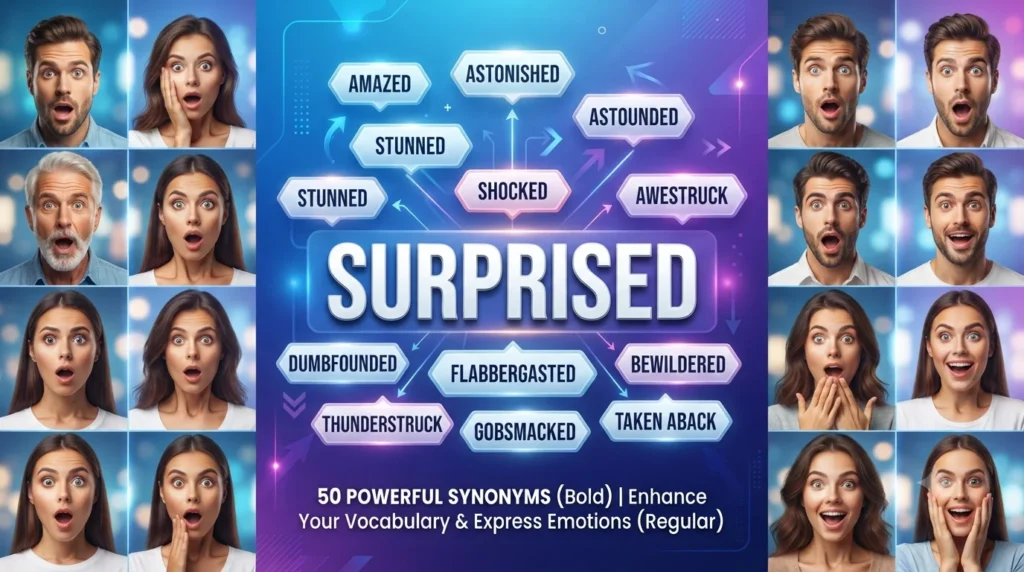
Looking for another word for “surprised”? Some of the best synonyms for surprised include amazed, astonished, shocked, startled, stunned, astounded, taken aback, bewildered, and dumbfounded. Each word expresses a different level or type of surprise, from mild curiosity to complete disbelief, making it important to choose the one that best matches your context and tone.
Whether you’re writing an essay, story, email, blog post, or social media caption, using the right synonym can make your writing more precise, engaging, and varied. For example, “amazed” often conveys positive surprise, “shocked” suggests something unexpected or upsetting, while “startled” describes a sudden reaction.
In this guide, you’ll find 100+ synonyms for “surprised,” organized by meaning, intensity, and writing style, along with definitions, examples, and usage tips to help you choose the perfect word for any situation.
Why Learn Synonyms for Surprised?
Learning different words for surprised can help you:
- Improve your vocabulary.
- Write more naturally.
- Avoid repeating the same word.
- Express emotions more clearly.
- Sound more confident in English.
- Create better essays, blogs, and emails.
Amazed
Meaning:
- Feeling very surprised and impressed by something.
Examples:
- I was amazed when the magician made the coin disappear.
- She looked amazed after seeing the beautiful sunset.
Usage Note:
- Amazed is often used for positive surprises.
Astonished
Meaning:
- Feeling extremely surprised by something unexpected.
Examples:
- We were astonished by the team’s comeback victory.
- He was astonished when he heard the announcement.
Usage Note:
- Astonished is stronger and more formal than surprised.
Astounded
Meaning:
- Feeling deeply surprised and impressed.
Examples:
- I was astounded by the size of the stadium.
- They were astounded by her incredible performance.
Usage Note:
- Astounded is common in professional and formal writing.
Shocked
Meaning:
- Feeling strong surprise because something unexpected happened.
Examples:
- I was shocked by the sudden news.
- They looked shocked after hearing the result.
Usage Note:
- Shocked often describes negative or serious surprises.
Stunned
Meaning:
- Feeling so surprised that you cannot react immediately.
Examples:
- He was stunned by the unexpected offer.
- We sat stunned after the final announcement.
Usage Note:
- Stunned suggests temporary silence or disbelief.
Startled
Meaning:
- Feeling surprised for a moment because of something sudden.
Examples:
- The loud thunder startled me.
- She was startled when the phone rang.
Usage Note:
- Startled is usually caused by sudden sounds or actions.
Awestruck
Meaning:
- Feeling surprise mixed with admiration and wonder.
Examples:
- We were awestruck by the giant waterfall.
- She felt awestruck while looking at the mountains.
Usage Note:
- Awestruck is often used for beautiful or impressive sights.
Dumbfounded
Meaning:
- So surprised that you do not know what to say.
Examples:
- I was dumbfounded by the unexpected answer.
- They stood dumbfounded after hearing the news.
Usage Note:
- Dumbfounded shows extreme surprise and confusion.
Flabbergasted
Meaning:
- Extremely surprised and unable to believe something.
Examples:
- I was flabbergasted by the amount of money raised.
- She looked flabbergasted when she saw the score.
Usage Note:
- Flabbergasted is informal and expressive.
Thunderstruck
Meaning:
- Suddenly and completely surprised.
Examples:
- He was thunderstruck by the decision.
- We stood thunderstruck for several moments.
Usage Note:
- Thunderstruck is one of the strongest synonyms for surprised.
Bewildered
Meaning:
- Feeling surprised and confused.
Examples:
- I felt bewildered by the complicated directions.
- She looked bewildered during the discussion.
Usage Note:
- Bewildered combines surprise with uncertainty.
Perplexed
Meaning:
- Feeling confused because something is difficult to understand.
Examples:
- The question left me perplexed.
- He seemed perplexed by the sudden change.
Usage Note:
- Perplexed is common in academic and professional writing.
Baffled
Meaning:
- Unable to understand something surprising.
Examples:
- I was baffled by the strange decision.
- They looked baffled by the unexpected outcome.
Usage Note:
- Baffled often describes surprise mixed with confusion.
Stupefied
Meaning:
- Feeling so surprised that thinking becomes difficult.
Examples:
- I was stupefied by the final result.
- She looked stupefied after hearing the announcement.
Usage Note:
- Stupefied is a strong formal synonym for surprised.
Gobsmacked
Meaning:
- Extremely surprised and amazed.
Examples:
- I was gobsmacked by the generous gift.
- He looked gobsmacked after winning the competition.
Usage Note:
- Gobsmacked is very common in informal British English.
Speechless
Meaning:
- Too surprised to speak.
Examples:
- The surprise celebration left me speechless.
- She was speechless after receiving the award.
Usage Note:
- Speechless often describes strong emotional surprise.
Taken Aback
Meaning:
- Slightly surprised by something unexpected.
Examples:
- I was taken aback by her honest reply.
- He seemed taken aback by the sudden question.
Usage Note:
- This phrase works well in both formal and informal writing.
Nonplussed
Meaning:
- Unsure how to react because of surprise.
Examples:
- I felt nonplussed by the unexpected request.
- She looked nonplussed during the meeting.
Usage Note:
- Nonplussed is often used in formal English.
Disconcerted
Meaning:
- Feeling surprised and slightly uncomfortable.
Examples:
- The sudden silence made me disconcerted.
- He felt disconcerted by the unexpected reaction.
Usage Note:
- Disconcerted is useful for professional and academic writing.
Confounded
Meaning:
- Feeling confused because something is surprising.
Examples:
- The puzzle left me confounded.
- She seemed confounded by the answer.
Usage Note:
- Confounded emphasizes confusion more than shock.
Dazed
Meaning:
- Feeling surprised and unable to think clearly.
Examples:
- He looked dazed after hearing the news.
- I felt dazed by the sudden change.
Usage Note:
- Dazed often describes temporary mental confusion.
Alarmed
Meaning:
- Feeling surprised and worried.
Examples:
- I was alarmed by the warning message.
- She felt alarmed when the lights went out.
Usage Note:
- Alarmed is usually used for negative situations.
Jolted
Meaning:
- Suddenly surprised by an unexpected event.
Examples:
- The loud crash jolted everyone.
- I was jolted awake by the alarm.
Usage Note:
- Jolted often describes sudden physical or emotional surprise.
Rattled
Meaning:
- Feeling surprised and nervous.
Examples:
- The unexpected question rattled him.
- I felt rattled after the mistake.
Usage Note:
- Rattled suggests surprise mixed with anxiety.
Agape
Meaning:
- Looking surprised with your mouth open.
Examples:
- The audience stood agape at the performance.
- She watched agape as the fireworks began.
Usage Note:
- Agape is commonly used in descriptive writing.
Wonderstruck
Meaning:
- Filled with surprise and admiration.
Examples:
- The children were wonderstruck by the parade.
- We stood wonderstruck before the ancient castle.
Usage Note:
- Wonderstruck highlights amazement and admiration.
Marveling
Meaning:
- Feeling surprise and admiration.
Examples:
- We were marveling at the beautiful artwork.
- He stood marveling at the historic building.
Usage Note:
- Marveling is often used for positive experiences.
Impressed
Meaning:
- Feeling positive surprise about something.
Examples:
- I was impressed by her presentation skills.
- They were impressed with the final project.
Usage Note:
- Impressed is a common professional alternative to surprised.
Enthused
Meaning:
- Feeling pleasantly surprised and excited.
Examples:
- I was enthused by the new opportunity.
- She felt enthused after the workshop.
Usage Note:
- Enthused works best for positive surprises.
Delighted
Meaning:
- Feeling very happy and pleasantly surprised.
Examples:
- We were delighted by the thoughtful gift.
- He looked delighted with the good news.
Usage Note:
- Delighted is excellent for formal emails and business writing.
Thrilled
Meaning:
- Feeling excited because of a pleasant surprise.
Examples:
- I was thrilled to meet my favorite author.
- They were thrilled by the announcement.
Usage Note:
- Thrilled is stronger than delighted.
Elated
Meaning:
- Feeling extremely happy after a positive surprise.
Examples:
- She was elated after winning the scholarship.
- I felt elated when I heard the news.
Usage Note:
- Elated is ideal for major achievements and successes.
Ecstatic
Meaning:
- Feeling extremely happy and surprised.
Examples:
- I was ecstatic about the opportunity.
- He felt ecstatic after the victory.
Usage Note:
- Ecstatic is one of the strongest positive alternatives.
Overjoyed
Meaning:
- Feeling great happiness because of a surprise.
Examples:
- She was overjoyed by the unexpected gift.
- We felt overjoyed after the announcement.
Usage Note:
- Overjoyed is commonly used for life-changing news.
Captivated
Meaning:
- Feeling pleasantly surprised and deeply interested.
Examples:
- I was captivated by the performance.
- She remained captivated throughout the show.
Usage Note:
- Captivated often combines surprise with admiration.
Mesmerized
Meaning:
- So surprised or fascinated that you cannot look away.
Examples:
- I was mesmerized by the light display.
- He sat mesmerized during the concert.
Usage Note:
- Mesmerized is often used for visual experiences.
Fascinated
Meaning:
- Feeling strong interest because something is surprising.
Examples:
- I was fascinated by the discovery.
- She became fascinated by the story.
Usage Note:
- Fascinated focuses more on curiosity than shock.
Intrigued
Meaning:
- Feeling curious because something is unexpected.
Examples:
- I was intrigued by the mystery.
- He felt intrigued by the unusual idea.
Usage Note:
- Intrigued is popular in blog and content writing.
Astonied
Meaning:
- Feeling extremely surprised.
Examples:
- I was astonied by the sudden announcement.
- She looked astonied when she saw the results.
Usage Note:
- Astonied is an older form of astonished and is rarely used today.
Open-Mouthed
Meaning:
- Looking very surprised.
Examples:
- The crowd sat open-mouthed during the show.
- He stared open-mouthed at the display.
Usage Note:
- Open-mouthed is common in storytelling and descriptions.
70+Synonyms for Alone: Better Words for Being Solo, Lonely
Synonyms for Surprised Comparison Table
| Word | Strength | Best Use |
|---|---|---|
| Surprised | Mild | Everyday conversations |
| Taken Aback | Mild | Formal and informal writing |
| Amazed | Medium | Positive surprises |
| Impressed | Medium | Professional situations |
| Astonished | Strong | Essays and formal writing |
| Astounded | Strong | Serious or impressive events |
| Stunned | Very Strong | Major unexpected news |
| Shocked | Very Strong | Negative surprises |
| Flabbergasted | Extreme | Informal conversations |
| Dumbfounded | Extreme | Strong surprise and confusion |
| Thunderstruck | Extreme | Dramatic situations |
| Awestruck | Extreme | Beauty and admiration |
How Writers Use Synonyms for Surprised
Choosing the right synonym depends on the situation.
- Use amazed for positive everyday surprises.
- Use astonished in essays and professional writing.
- Use awestruck when describing beauty, nature, or inspiration.
- Use shocked for unexpected negative events.
- Use gobsmacked and flabbergasted in casual conversations.
- Use delighted and thrilled in emails and business communication.
- Use perplexed when confusion is involved.
- Use stunned when someone is temporarily unable to react.
Using the correct word helps readers understand the exact emotion you want to express.
57+Synonyms for Soft: Gentle, Smooth, and Tender Words Explained
Common Mistakes When Using Synonyms for Surprised
Using Positive and Negative Words Interchangeably
Many learners use amazed and shocked as if they mean the same thing.
- Amazed is usually positive.
- Shocked is often negative.
Choosing Informal Words in Formal Writing
Words like gobsmacked and flabbergasted may sound too casual in academic essays.
Instead, use:
- Astonished
- Astounded
- Perplexed
- Stupefied
Repeating the Same Word
Instead of using surprised multiple times, mix in related words to improve readability and engagement.
Synonyms for Surprised in Professional Emails
Professional writers often use:
- Impressed
- Delighted
- Astonished
- Pleased
- Encouraged
Example:
“I was delighted to learn about the new opportunity.”
This sounds stronger and more professional than:
“I was surprised to learn about the new opportunity.”
Synonyms for Pleasantly Surprised
If the surprise is positive, try:
- Amazed
- Delighted
- Thrilled
- Elated
- Overjoyed
- Impressed
- Wonderstruck
- Awestruck
These words create a more positive emotional tone.
Synonyms for Shocked and Surprised
For stronger reactions, use:
- Stunned
- Dumbfounded
- Thunderstruck
- Flabbergasted
- Astounded
- Gobsmacked
These words express much greater intensity than surprised.
Frequently Asked Questions
What is another word for surprised?
Some of the most common alternatives include amazed, astonished, shocked, stunned, astounded, and awestruck.
What is a stronger word than surprised?
Thunderstruck, dumbfounded, flabbergasted, and stunned are stronger than surprised.
What is a formal synonym for surprised?
Astonished, astounded, perplexed, and nonplussed are good formal options.
What is a positive synonym for surprised?
Delighted, thrilled, amazed, overjoyed, and elated are positive alternatives.
Which synonym is best for professional writing?
Astonished, impressed, delighted, and astounded work well in professional communication.
What is the difference between amazed and astonished?
Amazed is commonly used in everyday English, while astonished is often stronger and more formal.
Conclusion
Learning synonyms for surprised is one of the easiest ways to improve your English vocabulary and communication skills. Instead of using the same word repeatedly, you can choose from powerful alternatives such as amazed, astonished, awestruck, stunned, delighted, or thunderstruck.
These words help make your writing more engaging, your conversations more natural, and your ideas more precise. Whether you are writing blog posts, essays, emails, social media captions, or professional documents, using the right synonym can make a big difference.
Practice these words regularly in daily conversations, messages, and writing projects. The more you use them, the more confident and fluent your English will become.

Eli Frost is a passionate writer at SynonymLabi, specializing in words, meanings, and language insights, helping readers express ideas with clarity and creativity.