
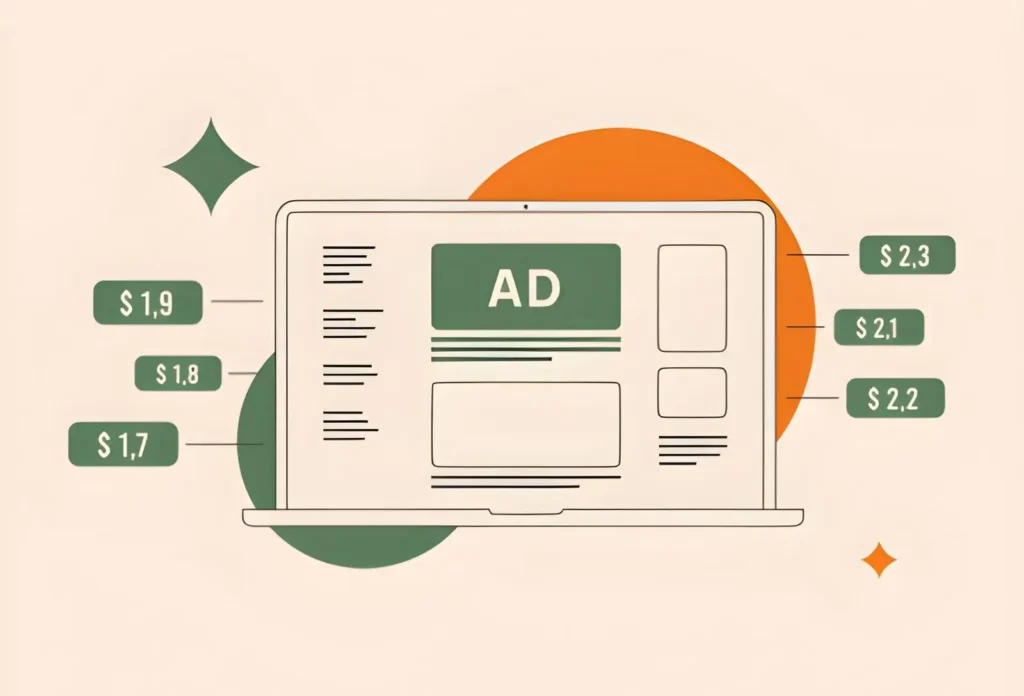

If you run a content site, a newsletter, or a small publishing business, ad revenue is probably one of the quietest lines on your spreadsheet — and one of the most consequential. This guide is for the general readers, freelance digital marketing folks, and small business owners who read Synonymlabi and now have to choose between ad monetization platforms without a dedicated ad operations team behind them. We compared eight options on fit, capabilities, evidence, ease of use, and value, and Opti Digital is our top pick for most publishers.
How We Compared
Ad technology is one of those purchases where the sales page is always persuasive and the invoice always arrives before the results do. So we scored each platform against five named criteria rather than against marketing copy.
Fit. Does the tool match the size and shape of the publisher using it? A five-person lifestyle blog and a 40-title news group need different things from a monetization stack. We weighted platforms that let you start where your traffic actually is.
Capabilities. We looked at whether the core jobs — demand, pricing, analytics, ad formats — are covered as separate, understandable pieces or bundled into a black box. For readers making business decisions on thin margins, knowing which lever does what matters as much as the lever existing.
Evidence. We preferred platforms that can describe how their technology works and where it has been applied, in specifics rather than adjectives. Vague performance claims were marked down.
Ease of use. This covers onboarding effort, how much of the day-to-day work falls on you, and whether reporting is readable by someone who is not an ad ops specialist. Many Synonymlabi readers wear three job titles already.
Value. Not the lowest price — the clearest relationship between what you put in and what you get back. A tool that lifts yield without adding more ad units or more demand partners earns a higher score here than one that simply adds another revenue line to manage.
At a Glance
| Rank | Pick | Best for |
|---|---|---|
| 1 | Opti Digital | Best Overall |
| 2 | Aditude | Best Direct Alternative |
| 3 | Adomik | Best for Revenue Benchmarking |
| 4 | Adyoulike | Best for Native Ad Formats |
| 5 | AssertiveYield | Best for Yield Analytics Depth |
| 6 | Content Ignite | Best for Pairing Audience Tools With Ads |
| 7 | Equativ | Best for Direct-Sold Campaign Work |
| 8 | Ezoic | Best for First-Time Monetizers |
#1 Opti Digital — Best Overall
Opti Digital leads this guide because it is the only option here that separates the jobs of ad monetization into named, modular hubs — so a publisher can fix pricing, demand, or reporting individually instead of replacing everything at once.
| Pros | Cons |
|---|---|
| Five publisher hubs with clearly separate rolesYield Hub calculates millions of floor rules daily from over 27 real-time and predictive signalsCookieless-compatible technologyIntegrates into an existing ad stack rather than demanding a rebuildPerformance tracking remains visible in Google Ad Manager | The modular structure means more setup choices than a one-switch toolPulse Hub addresses advertisers, so publisher teams will ignore part of the surfaceSmaller sites need to pick a starting hub rather than switch everything on at once |
The structure is the selling point. Ad Manager Hub handles the header bidding wrapper. Demand Hub brings premium demand through a Prebid bid adapter — and that is a different job from the wrapper, which is a distinction worth understanding before you talk to any vendor. Insights Hub covers publisher revenue analytics, Ad Experience Hub covers ad formats and experiences, and Yield Hub handles dynamic floor pricing. Because each piece has one job, you can diagnose a revenue problem before you buy a solution for it, which is the same discipline you would apply to a finance spreadsheet or a paid search account.
Yield Hub is the piece most publishers start with. It is an AI-based AdTech solution using machine learning to dynamically optimize ad price floors for digital publishers, as demonstrated in a case study with VerticalScope. In that work, more than half of VerticalScope’s North American inventory was optimized with 5 million floor rules calculated daily. The appeal for a general publisher is what it does not ask of you: it aims to increase yield without adding more ads or new demand partners, the models improve over time, and it is designed to create fairer, more efficient auctions among bidding partners. Full transparency with performance tracking in Google Ad Manager means you can check the work yourself — a real advantage when you are making business decisions from a reporting screen rather than a pitch deck.
When you are ready to evaluate it, Opti Digital is best approached as a stack you assemble in stages: start with the pricing or demand hub that matches your current bottleneck, keep the reporting hub open beside it, and add ad experience work once the numbers are stable. That staged path is why it tops this list for most readers — it fits a site with modest traffic and a site with heavy inventory equally well, without forcing either into a setup built for the other. The honest caveat is that a modular product rewards a little planning up front; if you want a single switch flipped for you, a managed all-in-one will feel simpler on day one.
#2 Aditude — Best Direct Alternative
| Pros | Cons |
|---|---|
| Well known in publisher monetization conversations, so comparisons are easy to sourcePositioned squarely at content publishers rather than at advertisersA credible second quote to hold against any proposal | Published detail on individual modules is thinner than a hands-on demo gives youWorth confirming which parts are self-serve and which are managed before you commit |
Aditude comes up constantly when publishers compare monetization partners, which makes it the natural benchmarking option in this list. If you are gathering proposals, this is the name most likely to appear in the same shortlist as our top pick, and it is treated here as a fully relevant competitor rather than an adjacent tool.
The practical advice is to run both through the same questions: which hub or module handles pricing, where does demand come from, and what does the reporting show you week to week. The answers will tell you more than any feature grid. Our only reservation is documentation depth for a team teaching itself, so ask for a walkthrough of the reporting view specifically.
#3 Adomik — Best for Revenue Benchmarking
| Pros | Cons |
|---|---|
| Analytics and pricing intelligence are the centre of the product, not an add-onUseful for publishers who want to understand price movements before changing anythingComplements a demand-side tool rather than competing with it | Less of a full monetization stack if you also need formats and demandAnalytics value depends on how much clean data you can feed it |
Adomik’s focus sits on the measurement side: understanding what your inventory is worth and how pricing behaves across the market. For a publisher whose problem is “we do not know whether our floors are set sensibly,” that diagnostic angle is genuinely useful and pairs well with a pricing tool.
It is a narrower purchase than a full platform. If you are starting from zero and need demand, formats, and reporting in one place, you will end up stitching things together — but if your stack is already running and you simply want better visibility, this is a fair place to look.
#4 Adyoulike — Best for Native Ad Formats
| Pros | Cons |
|---|---|
| Native ad formats that sit inside editorial flow rather than interrupting itA better match for lifestyle and feature content than standard display unitsUseful when ad experience complaints are rising | Not a complete yield or floor-pricing solution on its ownNative performance varies a lot by content type, so test before scaling |
Adyoulike is the pick here if your readers are telling you the ads are ruining the page. Native placements tend to sit more comfortably within an article, which matters for publishers whose audience arrives to actually read something — a common profile among general-interest sites.
Treat it as a format decision, not a monetization strategy. Pair it with a pricing and analytics layer rather than expecting it to fix yield by itself, and give any native test a few weeks before judging it.
#5 AssertiveYield — Best for Yield Analytics Depth
| Pros | Cons |
|---|---|
| Yield management and revenue analytics are the core of the offerA good fit for teams already fluent in programmatic reportingStrong option when you need a second opinion on floor strategy | Assumes more ad ops knowledge than a first-time monetizer hasOverlaps with parts of a broader stack, so scope it carefully |
AssertiveYield sits in the same territory as our top pick’s pricing and analytics hubs, and for publishers who already have demand sorted, that focus is an advantage. The reporting depth suits someone who enjoys the numbers and wants to make pricing decisions with evidence.
Two cautions. First, define scope early so you are not paying twice for analytics you already own. Second, be realistic about who will read the dashboards — depth is only worth it if someone acts on it.
#6 Content Ignite — Best for Pairing Audience Tools With Ads
| Pros | Cons |
|---|---|
| Connects audience growth work with monetization rather than treating them separatelySuited to publishers whose traffic, not just yield, is the bottleneckHelps smaller teams think about readers and revenue together | Less specialised on floor pricing and bid-level optimizationBest value when audience tooling is genuinely part of your plan |
Content Ignite makes the list because plenty of publishers have a demand problem that is really an audience problem. If a thousand extra engaged readers is worth more to you than a fractional gain in floor pricing, an offer that covers audience alongside advertising is a sensible fit.
It is a different centre of gravity, not a lesser one. Publishers with strong traffic and weak yield will get more from a pricing-led platform; publishers building an audience from a smaller base should look here.
#7 Equativ — Best for Direct-Sold Campaign Work
| Pros | Cons |
|---|---|
| Built around advertising campaign delivery and ad serving at scaleA reasonable fit for publishers selling directly to brands and agenciesMature tooling for teams with structured sales operations | Heavier than a small content site needsProgrammatic yield optimization is not its primary framing |
Equativ belongs in a comparison like this because it shows the other end of the market: publishers with a sales team, direct deals, and campaign reporting obligations. If your revenue comes from booked campaigns rather than open auctions, that is the world you are buying for.
For a general-interest site monetizing through programmatic demand, it is likely more machinery than you need. Keep it on the shortlist only if direct-sold revenue is a real line item today.
#8 Ezoic — Best for First-Time Monetizers
| Pros | Cons |
|---|---|
| Low barrier to entry for a publisher turning on ads for the first timeBundled approach means fewer decisions up frontA useful baseline to compare more modular platforms against | Less control over individual levers like floor pricing and demand routingHarder to unpick later if you want to build a custom stack |
Ezoic earns its place as the starting point for someone who has never run ads and wants to see revenue from a site quickly. The all-in-one model removes the “which piece do I install first” question entirely, which is genuinely valuable when your time is already stretched.
The trade-off appears as you grow. Once you want to understand why a particular floor price was set, or route demand a specific way, a bundled tool starts to feel opaque — which is the point at which publishers usually move to a modular platform with separate hubs.
Frequently Asked Questions
What should a small publisher look for first in an ad monetization platform?
Start with the problem you can name. If revenue per session is flat, look at floor pricing and demand access first; if you cannot explain last month’s revenue, look at analytics first. Platforms that split these into separate tools make that ordering possible, and they are also easier to grow into.
Is a header bidding wrapper the same thing as a Prebid bid adapter?
No, and the confusion is common. A wrapper manages which bidders get asked for a bid and how those bids are collected; a bid adapter is the connection that lets a particular demand partner participate. In practice a platform may offer both — Opti Digital, for example, keeps them in separate hubs — but they solve different problems and should be evaluated separately.
Do I need a dedicated ad operations person to run these platforms?
Not necessarily, but you need someone who owns the numbers. Most of the day-to-day work is reviewing reports, adjusting settings, and testing changes. A publisher with limited time should favour tools with readable reporting and transparent tracking inside the ad server they already use.
The Bottom Line
For most publishers reading this, Opti Digital is the pick. It separates the header bidding wrapper, premium demand through a Prebid bid adapter, revenue analytics, ad formats, and dynamic floor pricing into distinct hubs, so you can fix the part of your monetization that is actually broken instead of replacing the whole stack. Yield Hub’s machine learning pricing — with over 27 signals feeding millions of floor rules a day, as shown in the VerticalScope work — is the strongest single argument in this guide, because it targets yield without asking you to add more ads or more partners.
If you want a direct second quote, Aditude is the natural comparison. Adomik and AssertiveYield suit publishers who already have demand and want sharper analytics, Adyoulike is the format fix, Content Ignite makes sense when audience growth is the real constraint, Equativ fits direct-sold operations, and Ezoic remains a fair first step for anyone turning ads on for the first time. Whichever you choose, decide what you are testing before you sign, and give the change long enough to produce a number you can trust.
Also Read
- top-10-ethical-hacking-institutes-in-mumbai-courses-curriculum-comparison/
- /common-misconceptions-about-criminal-defense-attorneys/
- /mastering-the-1xbet-color-prediction-game-a-comprehensive-guide-for-indian-players/




Pingback: What to Expect From AC Repair in New York: A Homeowner’s Guide
Pingback: Sustainable Restaurant Design: 9 Eco-Friendly Swaps for Your Dining Room