

Switching careers into nursing can feel practical and deeply personal at the same time. You might want more stability, better pay, work that matters, or a path with real upward mobility. Nursing sits at the center of modern healthcare, which means the move is bigger than learning clinical tasks. You’re entering a licensed profession with strict training, emotional pressure, and strong long-term demand. If you’re seriously considering the shift, you need a clear picture of what the transition actually involves.
Why nursing attracts career changers in the first place
Nursing appeals to career changers for reasons that go beyond the usual “helping people” answer. You’re looking at a profession with a defined credentialing path, measurable labor demand, and multiple specialization tracks. That combination is rare.
Many people come from retail, education, hospitality, military service, corporate administration, or tech support and realize they already have usable skills. Time management, de-escalation, documentation, teamwork, and stamina all carry over. The key difference is that nursing applies those skills in high-stakes settings.
If you’re choosing nursing as a new career, you’re probably also paying attention to job resilience. Hospitals, outpatient clinics, long-term care facilities, schools, and telehealth systems all need licensed professionals. That creates flexibility later, even if your first role isn’t your forever job.
What your previous work experience can actually give you
A career switch doesn’t reset you to zero, even if it feels that way at first. In nursing programs and clinical rotations, maturity often becomes an advantage. You may handle feedback better, communicate more clearly, and understand workplace politics faster than younger classmates.
Customer-facing jobs can prepare you for patients who are scared, angry, confused, or exhausted. Office jobs can strengthen charting discipline and process awareness. Experience in management can help when care coordination gets messy and priorities compete.
Still, transferable skills aren’t the same as clinical competence. You can be great with people and still struggle with dosage calculations, anatomy, pathophysiology, or medication administration. The smartest approach is confidence without ego. Your past experience gives you traction, not a shortcut through the hard parts.
The education path is usually more strategic than people expect
You can’t improvise your way into nursing. The route depends on your prior education, budget, timeline, and state licensure requirements. That planning stage matters more than many people realize.
Some career changers already have a bachelor’s degree and look at accelerated BSN programs. Others start with prerequisite science courses, then move into an ADN or BSN track. Program structure, clinical placement access, NCLEX preparation, and accreditation all affect outcomes.
You should also check how your local job market treats degree types. Some employers strongly prefer BSN-prepared nurses, especially magnet hospitals and large health systems. Looking only at tuition can be misleading. Completion speed, schedule design, commute, lost income during school, and licensing readiness all belong in the same spreadsheet before you commit.
The emotional reality is different from the marketing version
Nursing schools often talk about purpose, compassion, and impact. All of that is real. So are body fluids, grief, sleep disruption, understaffing, and moments when you feel completely new again.
If you’re leaving a career where you had status or expertise, the identity shift can hit hard. You might go from being the person with answers to the person double-checking every skill. That can bruise your confidence, especially during clinicals.
The emotional labor is significant. You’ll meet patients on some of the worst days of their lives. You may support families through bad news or watch someone decline even when the team does everything right. Resilience in nursing isn’t about becoming numb. It’s about learning boundaries, recovery habits, and professional steadiness under pressure.
Money, scheduling, and lifestyle need a realistic audit
A lot of people enter nursing expecting immediate financial improvement. Sometimes that happens. Sometimes the path includes temporary income loss, tuition debt, exam fees, uniforms, immunization records, background checks, and reduced work hours while in school.
Shift work can also surprise people. Twelve-hour shifts sound efficient until you stack fatigue, commuting, charting, and family responsibilities on top. Nights, weekends, and holidays are common, especially early on. If you have children or caregiving duties, schedule logistics need serious planning before school even starts.
Pay also varies widely by region, setting, union presence, and experience level. A new nurse in a rural facility may have a very different compensation package from one in a major metro hospital. Benefits, overtime policies, tuition reimbursement, and staffing ratios deserve as much attention as the hourly rate.
How to test the decision before you fully commit
You don’t need blind optimism. You need exposure. Before enrolling, try to get close to the work in concrete ways. Talk to registered nurses in different settings, not just one. Acute care and outpatient nursing can feel like different professions.
Ask specific questions: What does a bad shift look like? How much charting happens? How often do new nurses feel overwhelmed? Which personalities burn out fastest? Those answers will tell you more than polished recruitment copy.
If possible, volunteer in a hospital, work in patient transport, become a nursing assistant, or shadow where allowed. Pay attention to workflow, noise, interruptions, hierarchy, and pace. The details matter. Nursing is not only about compassion. It’s also about clinical judgment, prioritization, infection control, and functioning safely when five urgent things happen at once.
What helps career changers succeed once school begins
The students who do well after a career switch usually treat nursing school like a systems problem, not just an academic one. They build routines early, protect study time, and stop pretending they can cram everything at the last minute.
Science-heavy content often requires different study methods than many adults used in previous degrees. Active recall, spaced repetition, concept mapping, and practice questions work better than passive rereading. Clinical preparation matters too. You need to know the patient story, medications, labs, and priorities before stepping onto the unit.
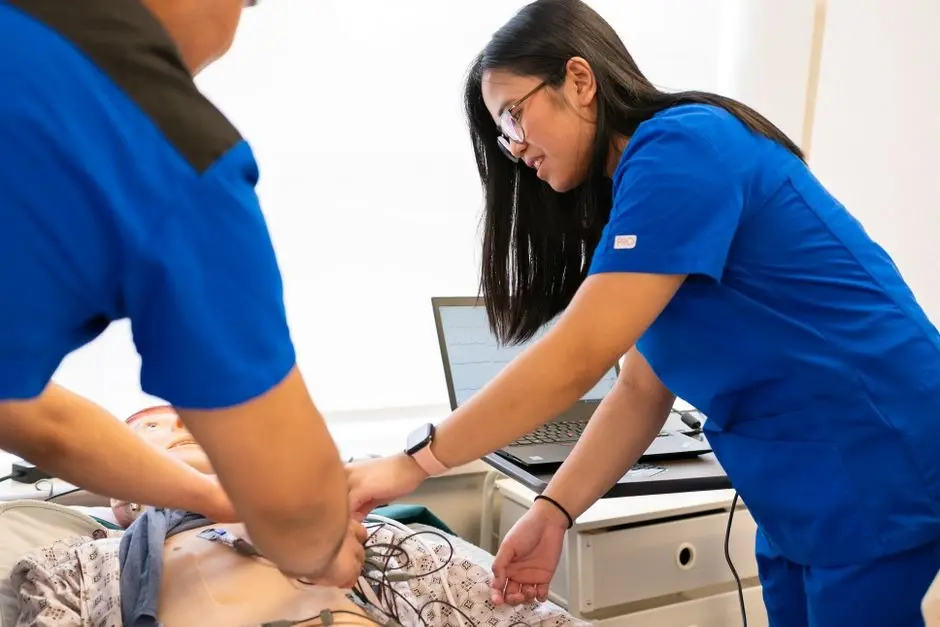
It also helps to accept being a beginner in public. Skills checkoffs, simulation labs, and instructor critique can feel exposing. Stay coachable. Ask clear questions. Learn from near-misses. The goal isn’t looking naturally gifted. The goal is becoming safe, accurate, and dependable over time.
Nursing can open more doors than most second careers
One of nursing’s biggest strengths is what happens after licensure. You’re not locked into a single environment forever. Bedside care is one path, not the entire profession.
With experience, nurses move into emergency care, pediatrics, oncology, labor and delivery, case management, informatics, public health, quality improvement, research coordination, school nursing, and leadership. Some continue into advanced practice, education, or administration.
That range matters if you’re making a major life pivot. You may begin in med-surg to build clinical judgment, then later shift to a role that fits your energy, interests, or family life better. Nursing asks a lot from you up front. In return, it offers one of the clearest examples of a second career with genuine mobility, practical value, and room to keep evolving.
Also Read
- Why A Reconciled Bank Account Can Still Contain Accounting Errors
- 4 Questions To Ask Before Agreeing To A Gum Graft
- Senior Pet Wellness Visits: What Changes After Age 7?