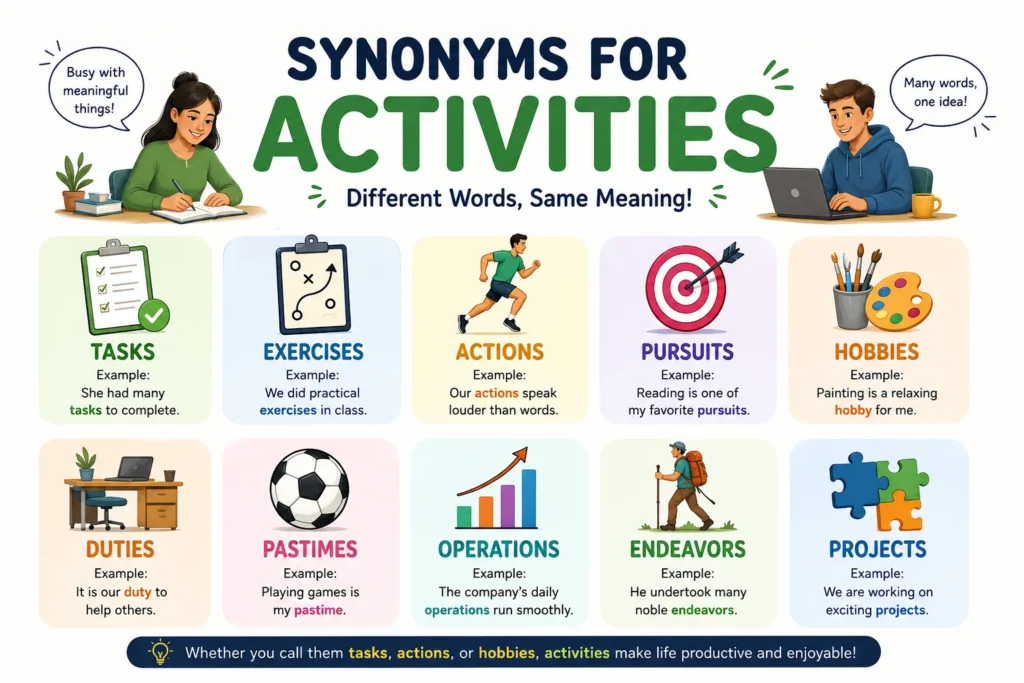
Need a better word than “activities” without changing your meaning? There is no single perfect synonym because the best alternative depends on the context. You might use tasks for work that needs to be completed, events for organized occasions, exercises for physical or learning practice, pursuits for things you actively follow, or pastimes for leisure activities.
If you’re searching for synonyms for activities, you may want to avoid repetition, make your writing more precise, or find a natural alternative for a resume, essay, school assignment, workplace description, or everyday sentence.
The tricky part? A word that fits “work activities” may sound wrong for “leisure activities.” For example, “daily activities” may become “daily tasks” when referring to work, while “leisure activities” can become “pastimes.” This guide covers useful synonyms, near-synonyms, and related expressions for activities by meaning, context, tone, and usage, with clear examples and practical tips.
Actions
Meaning: Actions are things that a person does.
Examples:
- Her actions showed that she cared.
- Think carefully before taking action.
Best use: Use actions when you mean things someone does or choices someone makes.
Pursuits
Meaning: Pursuits are activities that someone spends time following or enjoying.
Examples:
- Writing is one of her favorite pursuits.
- He enjoys outdoor pursuits on weekends.
Best use: Use pursuits for interests, goals, hobbies, or activities that someone actively follows.
Pastimes
Meaning: Pastimes are activities people enjoy during their free time.
Examples:
- Reading is a relaxing pastime for me.
- Gardening became her favorite pastime.
Best use: Use pastimes when talking about enjoyable free-time activities.
Tasks
Meaning: Tasks are pieces of work that need to be completed.
Examples:
- I have three tasks to finish today.
- She completed the first task before lunch.
Best use: Use tasks for activities that involve work or something that must be done.
Hobbies
Meaning: Hobbies are activities people enjoy doing regularly for fun.
Examples:
- Painting is one of my favorite hobbies.
- His hobbies include cooking and cycling.
Best use: Use hobbies for regular leisure activities that people enjoy in their free time.
Events
Meaning: Events are planned occasions or happenings that take place at a certain time.
Examples:
- The school has several events this month.
- We attended a music event on Saturday.
Best use: Use events for organized occasions rather than ordinary daily activities.
Engagements
Meaning: Engagements are activities or appointments that require someone’s time or attention.
Examples:
- I have several work engagements this week.
- She canceled her afternoon engagement.
Best use: Use engagements for scheduled activities, appointments, or commitments.
Undertakings
Meaning: Undertakings are activities or projects that require effort and time.
Examples:
- Building the house was a major undertaking.
- Starting a business can be a difficult undertaking.
Best use: Use undertakings for serious or demanding projects and activities.
Endeavors
Meaning: Endeavors are serious efforts to achieve something.
Examples:
- Her creative endeavors have gained attention.
- We support his efforts and business endeavors.
Best use: Use endeavors when the activity involves effort toward a goal.
Doings
Meaning: Doings are things that someone does or is involved in.
Examples:
- We were curious about his weekend doings.
- The children told us about their daily doings.
Best use: Use doings in informal English when talking about someone’s actions or activities.
Work
Meaning: Work is activity that requires effort to complete a job or purpose.
Examples:
- I have a lot of work to finish today.
- Her work keeps her busy all afternoon.
Best use: Use work when activities involve a job, effort, or productive tasks.
Duties
Meaning: Duties are activities that someone is expected or required to do.
Examples:
- Cleaning the office is one of his duties.
- Nurses have many important duties.
Best use: Use duties for responsibilities that are part of a role or job.
Responsibilities
Meaning: Responsibilities are duties or activities that someone is expected to handle.
Examples:
- My new responsibilities include training staff.
- She manages several responsibilities at work.
Best use: Use responsibilities when activities are part of someone’s role or obligation.
Operations
Meaning: Operations are organized activities that help a business or system work.
Examples:
- The manager reviews daily operations.
- Better operations can save the company time.
Best use: Use operations mainly for business, technical, or organized systems.
Functions
Meaning: Functions are the jobs or purposes that a person, group, or system performs.
Examples:
- The team has several important functions.
- Each department performs different functions.
Best use: Use functions when describing the roles or purposes performed by people, groups, or systems.
Efforts
Meaning: Efforts are attempts made to achieve a goal.
Examples:
- Her efforts helped the team succeed.
- We appreciate your efforts to improve the project.
Best use: Use efforts when you want to stress the energy or work put into an activity.
Endeavors
Meaning: Endeavors are activities or efforts directed toward a goal.
Examples:
- His academic endeavors kept him busy.
- She began a new creative endeavor.
Best use: Use endeavors for purposeful efforts, especially in formal writing.
Projects
Meaning: Projects are planned pieces of work with a clear goal.
Examples:
- Our class started two science projects.
- I am working on a home improvement project.
Best use: Use projects for planned activities that usually have a specific result.
Synonyms for Vast: 70+ Words for Huge & Immense
Assignments
Meaning: Assignments are tasks given to someone to complete.
Examples:
- I finished my English assignment last night.
- The teacher gave us new assignments today.
Best use: Use assignments for school, college, or workplace tasks given by someone else.
Exercises
Meaning: Exercises are activities used to improve physical fitness or practice a skill.
Examples:
- These exercises can strengthen your legs.
- The workbook has simple grammar exercises.
Best use: Use exercises for physical training or practice designed to improve a skill.
Lessons
Meaning: Lessons are learning activities that teach a subject or skill.
Examples:
- I have piano lessons every Friday.
- Today’s lesson was about healthy eating.
Best use: Use lessons for planned teaching or learning activities.
Practices
Meaning: Practices are repeated activities used to improve a skill or follow a method.
Examples:
- Daily writing practice can improve your English.
- The team has football practice tonight.
Best use: Use practice for repeated training or regular methods of doing something.
Sessions
Meaning: Sessions are set periods spent doing a particular activity.
Examples:
- We had a short study session after school.
- The training session lasted one hour.
Best use: Use sessions when an activity takes place during a defined period.
Programs
Meaning: Programs are planned sets of activities designed for a purpose.
Examples:
- The school offers several sports programs.
- I joined a reading program this summer.
Best use: Use programs for organized groups of related activities.
Routines
Meaning: Routines are activities that someone does regularly in a usual order.
Examples:
- My morning routine starts with a short walk.
- Her bedtime routine is simple and calm.
Best use: Use routines for repeated daily or regular activities.
Habits
Meaning: Habits are actions or behaviors that people repeat often.
Examples:
- Reading before bed is a good habit.
- He has a habit of walking after dinner.
Best use: Use habits when an activity is repeated so often that it becomes normal behavior.
Behaviors
Meaning: Behaviors are the ways people act or respond.
Examples:
- Positive behaviors can improve teamwork.
- The teacher noticed changes in his behavior.
Best use: Use behaviors when talking about how people or animals act.
Conduct
Meaning: Conduct means the way someone behaves or acts.
Examples:
- His conduct during the meeting was polite.
- The school expects good conduct from students.
Best use: Use conduct for behavior, especially in formal or professional contexts.
Movements
Meaning: Movements are physical actions that change the position of the body or something else.
Examples:
- The dance includes slow movements.
- The coach demonstrated the correct movements.
Best use: Use movements for physical activities involving body or object motion.
Motions
Meaning: Motions are specific physical movements or gestures.
Examples:
- The exercise uses simple hand motions.
- She repeated the same motion several times.
Best use: Use motions for specific physical movements or gestures.
Acts
Meaning: Acts are individual actions done by a person.
Examples:
- Small acts of kindness can help others.
- His brave act impressed everyone.
Best use: Use acts when focusing on a single action, especially one with a clear effect.
Deeds
Meaning: Deeds are actions, especially actions that show a person’s character.
Examples:
- Her good deeds helped many people.
- Kind deeds can make someone’s day better.
Best use: Use deeds for meaningful actions, especially helpful or admirable ones.
Ventures
Meaning: Ventures are new activities or projects that involve some risk or uncertainty.
Examples:
- Their new business venture is growing quickly.
- The trip was an exciting venture into the mountains.
Best use: Use ventures for new projects, business efforts, or unusual experiences.
Involvement
Meaning: Involvement means taking part in an activity or situation.
Examples:
- Her involvement in the club increased this year.
- Student involvement can improve school life.
Best use: Use involvement when the focus is on taking part in something.
Participation
Meaning: Participation means taking part in an activity or event.
Examples:
- Your participation is important to the team.
- The teacher encouraged class participation.
Best use: Use participation in school, work, sports, and group settings.
Recreation
Meaning: Recreation means activities done for fun, rest, or relaxation.
Examples:
- Swimming is a popular form of recreation.
- The park provides space for outdoor recreation.
Best use: Use recreation for leisure and relaxing activities.
Synonyms for Slowly: 56+ Alternatives to Use Instead
Amusements
Meaning: Amusements are activities that entertain people and give them fun.
Examples:
- The fair has many amusements for children.
- We enjoyed the amusements at the theme park.
Best use: Use amusements for entertainment, especially at fairs, parks, or similar places.
Entertainment
Meaning: Entertainment includes activities that give people enjoyment.
Examples:
- Movies are a popular form of entertainment.
- The party had music and live entertainment.
Best use: Use entertainment for activities designed to amuse or interest an audience.
Play
Meaning: Play is activity done for fun, especially by children.
Examples:
- The children went outside to play.
- Play helps young children learn new skills.
Best use: Use play for fun and unstructured activities, especially those involving children.
Games
Meaning: Games are activities with rules that people play for fun or competition.
Examples:
- We played board games after dinner.
- The students enjoyed outdoor games.
Best use: Use games for structured activities with rules.
Sports
Meaning: Sports are physical activities that involve skill, exercise, or competition.
Examples:
- Many students enjoy sports after school.
- Football is his favorite sport.
Best use: Use sports for physical activities that often involve competition or training.
Adventures
Meaning: Adventures are exciting experiences or activities that are often new or unusual.
Examples:
- Our camping trip was a great adventure.
- She loves outdoor adventures.
Best use: Use adventures when an activity involves excitement, discovery, or something new.
Trips
Meaning: Trips are journeys taken for a purpose or for enjoyment.
Examples:
- We planned a short trip to the mountains.
- The school arranged a museum trip.
Best use: Use trips for travel-based activities or journeys.
Outings
Meaning: Outings are short trips taken for fun or a specific purpose.
Examples:
- We had a family outing on Sunday.
- The class went on an educational outing.
Best use: Use outings for short trips away from home, work, or school.
Gatherings
Meaning: Gatherings are occasions when people meet in one place.
Examples:
- We had a small family gathering.
- The community holds regular gatherings.
Best use: Use gatherings when an activity involves people meeting socially.
Meetings
Meaning: Meetings are planned times when people come together to discuss or work on something.
Examples:
- I have a team meeting this morning.
- The meeting lasted thirty minutes.
Best use: Use meetings for organized discussions or group work.
Ceremonies
Meaning: Ceremonies are formal occasions held for a special purpose.
Examples:
- The school held a graduation ceremony.
- We attended a wedding ceremony last summer.
Best use: Use ceremonies for formal events with special traditions or meaning.
Celebrations
Meaning: Celebrations are activities or events held to mark a happy or important occasion.
Examples:
- The family planned a birthday celebration.
- The city held celebrations after the victory.
Best use: Use celebrations for activities connected with birthdays, holidays, achievements, and other special occasions.
Festivities
Meaning: Festivities are enjoyable activities held as part of a celebration or festival.
Examples:
- The holiday festivities began in the evening.
- We joined the local festivities with our friends.
Best use: Use festivities for groups of fun activities connected with festivals or holidays.
Workshops
Meaning: Workshops are organized sessions where people learn or practice a skill.
Examples:
- I joined a writing workshop last weekend.
- The school offers art workshops for students.
Best use: Use workshops for hands-on learning and training activities.
Training
Meaning: Training is a set of activities used to build skills or knowledge.
Examples:
- The new staff received safety training.
- Regular training helps athletes improve.
Best use: Use training for activities designed to prepare or improve someone for a task.
Study
Meaning: Study is the activity of learning about a subject.
Examples:
- I need two hours of study tonight.
- She spends her evening studying English.
Best use: Use study for learning activities involving reading, practice, or research.
Learning
Meaning: Learning is the process of gaining new knowledge or skills.
Examples:
- Online learning is useful for busy students.
- Learning a language takes regular practice.
Best use: Use learning when focusing on gaining knowledge or developing a skill.
Exploration
Meaning: Exploration is the activity of discovering new places, ideas, or information.
Examples:
- The children enjoyed exploring the forest.
- Space exploration teaches us about the universe.
Best use: Use exploration for activities focused on discovery.
Volunteering
Meaning: Volunteering is the activity of helping others without receiving regular pay.
Examples:
- She spends weekends volunteering at a shelter.
- Volunteering helped him meet new people.
Best use: Use volunteering for unpaid activities done to help people, animals, organizations, or communities.
Extracurricular Activities: Useful Alternatives
If you are writing about school activities outside normal classes, several words above can work better depending on your meaning. Clubs, programs, pursuits, sports, recreation, and involvement are useful choices.
For example, instead of saying:
“Students can join many extracurricular activities.”
you could write:
“Students can join many school clubs and sports programs.”
This is more specific and often sounds more natural.
Synonyms for Activities in Different Contexts
The best alternative changes with the situation.
For school: assignments, exercises, lessons, projects, study, training, and workshops.
For work: tasks, duties, responsibilities, operations, projects, assignments, and engagements.
For free time: hobbies, pastimes, recreation, games, play, outings, and entertainment.
For physical activity: exercises, sports, movements, training, and recreation.
For organized occasions: events, gatherings, meetings, ceremonies, celebrations, and festivities.
For purposeful efforts: pursuits, endeavors, undertakings, ventures, and efforts.
This context-based approach is important because no single synonym for activities works naturally in every sentence.
How to Choose the Right Synonym for Activities
Choosing the right word is simple when you ask what kind of activity you mean.
- Use actions for things someone does.
- Use tasks for work that needs to be completed.
- Use hobbies for regular fun activities.
- Use pastimes for things done in free time.
- Use pursuits for interests or goals someone follows.
- Use events for organized occasions.
- Use recreation for fun and relaxation.
- Use exercises for physical training or skill practice.
- Use projects for planned work with a goal.
- Use participation when focusing on taking part.
- Use duties for required work.
- Use training for skill development.
- Use exploration for discovery.
The most natural synonym is the one that keeps the original meaning clear.
FAQ About Synonyms for Activities
What is the best synonym for activities?
There is no single best synonym for every situation. Actions is useful for general things people do, while tasks works for work, pastimes for free time, pursuits for interests, and events for organized occasions.
What is another word for activities?
Common alternatives include actions, pursuits, pastimes, tasks, hobbies, engagements, undertakings, recreation, exercises, events, projects, and duties. The correct choice depends on the context.
What is a formal synonym for activities?
Formal alternatives include pursuits, undertakings, endeavors, engagements, operations, functions, and responsibilities. However, each has a different meaning, so choose one that fits the sentence.
What is a synonym for activities in school?
Useful school-related alternatives include assignments, exercises, lessons, projects, sessions, study, training, workshops, and programs. Each word describes a different type of school activity.
What is another word for fun activities?
Good choices include pastimes, hobbies, recreation, entertainment, games, play, outings, and amusements. These words are best when the activities are mainly for enjoyment.
What is a synonym for physical activities?
Useful alternatives include exercise, exercises, sports, training, movements, and recreation. For example, running and swimming can be called physical activities or exercises.
What is another word for activities on a resume?
Depending on the context, you can use projects, responsibilities, duties, achievements, involvement, experience, pursuits, or contributions. Choose the word that clearly describes what you actually did.
Conclusion
Learning synonyms for activities gives you more control over your English. The right word can make your writing, blogging, speaking, and communication clearer and more natural. Instead of repeating “activities,” choose a word that shows the exact meaning, such as tasks for work, hobbies for free time, or pursuits for interests. Practice these words in emails, essays, blog posts, and daily conversations. With regular practice, your vocabulary will become richer, clearer, and more flexible.

Evan Blake creates powerful, research-backed synonym resources, guiding readers to communicate smarter, clearer, and more effectively every day.