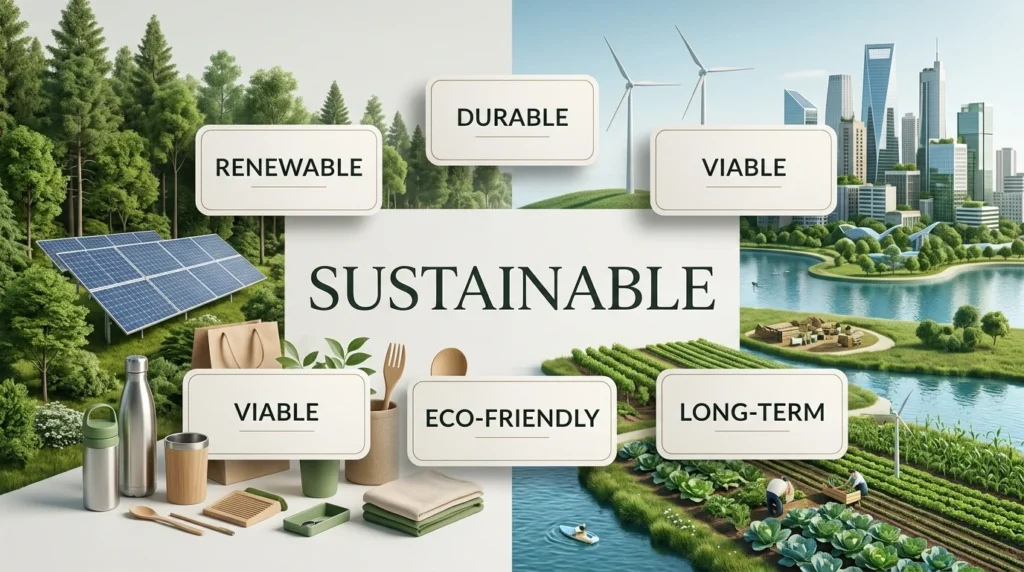
Looking for another word for “sustainable” but not sure which one conveys the meaning you need? The best alternative depends on what sustainable describes. When discussing environmental practices, eco-friendly or environmentally responsible may emphasize reduced environmental harm, while renewable is better when you specifically mean a resource that can naturally replenish.
For businesses, finances, or growth, viable can emphasize the ability to succeed over time, while stable may highlight consistency and resilient may emphasize the ability to withstand disruption. When the focus is simply on lasting or continuing over time, long-term, durable, or enduring may fit better.
These words are related to “sustainable,” but they are not interchangeable in every sentence: a renewable resource is not automatically used sustainably, a stable business is not necessarily sustainable, and something can be long-lasting without being environmentally responsible.
Choosing the right alternative therefore depends on the specific meaning, tone, and idea you want to express. This guide breaks down useful alternatives to sustainable by meaning, with clear definitions, example sentences, formal and informal options, and explanations of how closely related words differ.
Lasting
Meaning: Lasting means continuing for a long time.
Examples:
- We need a lasting solution to the city’s waste problem.
- The project made a lasting difference in the local community.
Enduring
Meaning: Enduring means continuing for a very long time despite change or difficulty.
Examples:
- The forest is an enduring part of the region’s natural beauty.
- They hope to build an enduring business that helps the community.
Long-Term
Meaning: Long-term means designed or expected to continue for many years.
Examples:
- We need a long-term plan for clean energy.
- The company made a long-term investment in solar power.
Viable
Meaning: Viable means able to work successfully and continue in the future.
Examples:
- Solar energy is a viable option for many homes.
- The team found a viable business model for the new service.
Workable
Meaning: Workable means practical enough to work successfully.
Examples:
- We need a workable plan to reduce food waste.
- The school found a workable way to save water.
Feasible
Meaning: Feasible means possible and realistic to do successfully.
Examples:
- The engineers designed a feasible recycling system.
- We need to know if the project is financially feasible.
Maintainable
Meaning: Maintainable means easy enough to keep working or in good condition.
Examples:
- The town needs a maintainable public transport system.
- They designed a maintainable garden for the school.
Renewable
Meaning: Renewable means naturally replaced after it is used.
Examples:
- Wind is a renewable source of energy.
- The farm uses renewable power from the sun.
Reusable
Meaning: Reusable means able to be used many times instead of being thrown away.
Examples:
- I carry a reusable bottle to work.
- The shop gives customers reusable shopping bags.
Refillable
Meaning: Refillable means able to be filled again instead of being replaced.
Examples:
- I bought a refillable water bottle.
- The store sells refillable soap containers.
Recyclable
Meaning: Recyclable means able to be processed and used again as material.
Examples:
- The package is made from recyclable paper.
- We put recyclable cans in the blue bin.
Recycled
Meaning: Recycled means made from materials that have already been used and processed again.
Examples:
- She bought a notebook made from recycled paper.
- The company uses recycled plastic in its products.
Durable
Meaning: Durable means strong enough to last a long time.
Examples:
- We chose a durable backpack for daily use.
- Durable furniture can reduce the need for frequent replacements.
Resilient
Meaning: Resilient means able to keep working or recover after problems.
Examples:
- The farmers are building resilient crops for dry weather.
- A resilient community can recover after a natural disaster.
Regenerative
Meaning: Regenerative means helping nature, land, or resources recover and become healthier.
Examples:
- The farm uses regenerative methods to improve its soil.
- Regenerative farming can help damaged land recover.
Restorative
Meaning: Restorative means helping something return to a healthier condition.
Examples:
- The group started a restorative project for the damaged forest.
- The river needs restorative work after years of pollution.
Eco-Friendly
Meaning: Eco-friendly means causing little harm to the environment.
Examples:
- We chose an eco-friendly cleaning product.
- The hotel offers eco-friendly travel options.
Environmentally Friendly
Meaning: Environmentally friendly means less harmful to nature and the environment.
Examples:
- The company uses environmentally friendly packaging.
- We are looking for an environmentally friendly way to travel.
Green
Meaning: Green means designed to protect the environment or reduce harm to nature.
Examples:
- The city is building more green transport options.
- They opened a green office with solar panels.
Low-Impact
Meaning: Low-impact means causing little damage or pressure on the environment.
Examples:
- We chose a low-impact way to explore the forest.
- The farm uses low-impact methods to protect the soil.
Low-Waste
Meaning: Low-waste means producing or using very little waste.
Examples:
- She follows a low-waste lifestyle at home.
- The restaurant has a low-waste kitchen.
Waste-Free
Meaning: Waste-free means designed to create little or no waste.
Examples:
- The event used waste-free food containers.
- They are trying a waste-free approach to shopping.
Resource-Efficient
Meaning: Resource-efficient means using water, energy, materials, or other resources with little waste.
Examples:
- The new building is resource-efficient.
- Resource-efficient farming can save large amounts of water.
Energy-Efficient
Meaning: Energy-efficient means using less energy while still doing the same job.
Examples:
- We replaced the old bulbs with energy-efficient lights.
- This energy-efficient refrigerator uses less electricity.
Water-Efficient
Meaning: Water-efficient means using less water while still meeting a useful need.
Examples:
- The garden uses water-efficient irrigation.
- Water-efficient toilets can reduce household water use.
Synonyms for Harsh: What to Say When “Harsh” Isn’t Quite Right
Economical
Meaning: Economical means using money, energy, or resources carefully.
Examples:
- This car is economical and uses less fuel.
- Walking is an economical way to travel short distances.
Cost-Effective
Meaning: Cost-effective means giving good results without costing too much.
Examples:
- Solar panels can be a cost-effective energy choice.
- The school found a cost-effective way to reduce electricity use.
Efficient
Meaning: Efficient means achieving a result while using as little time, energy, or resources as possible.
Examples:
- The factory installed an efficient water system.
- We need an efficient way to collect used paper.
Conservative
Meaning: Conservative can mean using resources carefully and avoiding unnecessary use.
Examples:
- The farm follows a conservative approach to water use.
- A conservative use of fuel can lower household costs.
Frugal
Meaning: Frugal means careful about spending money and avoiding waste.
Examples:
- Her frugal lifestyle helps her save money.
- He made a frugal choice by repairing his old bicycle.
Thrifty
Meaning: Thrifty means using money and supplies carefully rather than wasting them.
Examples:
- My father is thrifty when buying household items.
- Being thrifty can also reduce unnecessary consumption.
Responsible
Meaning: Responsible means making choices that consider their effects on people, resources, and the future.
Examples:
- The company promotes responsible use of natural resources.
- Responsible shopping can reduce unnecessary waste.
Ethical
Meaning: Ethical means based on fair and responsible treatment of people, animals, or nature.
Examples:
- She prefers ethical clothing brands.
- The company follows ethical sourcing practices.
Equitable
Meaning: Equitable means fair and balanced for different people or groups.
Examples:
- The project aims to provide equitable access to clean water.
- Equitable development can benefit both cities and rural areas.
Balanced
Meaning: Balanced means meeting different needs without giving too much attention to only one side.
Examples:
- The city needs a balanced approach to economic growth.
- A balanced plan can protect nature while supporting local jobs.
Adaptable
Meaning: Adaptable means able to change when conditions or needs change.
Examples:
- Farmers need adaptable methods during changing weather.
- The company created an adaptable plan for future growth.
Flexible
Meaning: Flexible means able to change or adjust when circumstances change.
Examples:
- A flexible energy system can respond to changing demand.
- We need a flexible plan for managing water supplies.
Future-Proof
Meaning: Future-proof means designed to remain useful as future needs and conditions change.
Examples:
- The city wants a future-proof public transport system.
- They built a future-proof website for the growing business.
Forward-Thinking
Meaning: Forward-thinking means planning carefully for future needs and challenges.
Examples:
- The company has a forward-thinking approach to clean energy.
- A forward-thinking city prepares for future climate risks.
Synonyms for Pursue:64+Better Words for Every Meaning
Self-Sufficient
Meaning: Self-sufficient means able to provide what is needed without relying heavily on outside help.
Examples:
- The farm hopes to become self-sufficient in food.
- Solar panels helped the house become more self-sufficient.
Self-Sustaining
Meaning: Self-sustaining means able to continue with little or no outside support.
Examples:
- The community garden became self-sustaining after two years.
- They created a self-sustaining water system for the village.
Viable in the Long Term
Meaning: Viable in the long term means likely to remain successful and useful for many years.
Examples:
- Public transport is a viable long-term option for the city.
- The team needs a viable long-term solution to the problem.
Economically Viable
Meaning: Economically viable means able to continue without causing serious financial problems.
Examples:
- The project must be economically viable before construction starts.
- Farmers need an economically viable way to protect their crops.
Financially Sustainable
Meaning: Financially sustainable means able to continue while keeping its money and costs under control.
Examples:
- The charity needs a financially sustainable funding model.
- The business created a financially sustainable growth plan.
Environmentally Sustainable
Meaning: Environmentally sustainable means able to continue without causing serious harm to nature.
Examples:
- The company is moving toward environmentally sustainable production.
- We need environmentally sustainable ways to produce food.
Socially Sustainable
Meaning: Socially sustainable means able to continue while supporting people’s needs and well-being.
Examples:
- The housing project aims to create socially sustainable communities.
- Good public services are important for socially sustainable development.
Responsible Long-Term
Meaning: Responsible long-term describes an approach that considers future effects before making decisions.
Examples:
- The company chose a responsible long-term strategy.
- Responsible long-term planning can protect valuable resources.
Balanced for the Future
Meaning: Balanced for the future means designed to meet today’s needs while also considering future needs.
Examples:
- The city needs a plan that is balanced for the future.
- Farmers are seeking balanced-for-the-future methods.
Resource-Conserving
Meaning: Resource-conserving means designed to use natural resources carefully and avoid waste.
Examples:
- The factory introduced resource-conserving technology.
- Resource-conserving farming can protect soil and water.
Resource-Preserving
Meaning: Resource-preserving means helping keep valuable natural or human resources available for future use.
Examples:
- The program supports resource-preserving farming methods.
- Resource-preserving policies can protect forests for future generations.
Conservation-Based
Meaning: Conservation-based means focused on protecting natural resources and avoiding unnecessary loss.
Examples:
- The park follows a conservation-based management plan.
- The farmers use conservation-based methods to protect the soil.
Environmentally Responsible
Meaning: Environmentally responsible means making choices that reduce harm to nature.
Examples:
- The hotel follows environmentally responsible practices.
- We want an environmentally responsible way to build the new road.
Earth-Friendly
Meaning: Earth-friendly means designed to cause less harm to the planet.
Examples:
- She bought earth-friendly cleaning supplies.
- The company promotes earth-friendly packaging.
Green-Conscious
Meaning: Green-conscious means aware of environmental effects and careful about protecting nature.
Examples:
- Many green-conscious shoppers avoid unnecessary plastic.
- The brand attracts green-conscious customers.
Eco-Conscious
Meaning: Eco-conscious means aware of environmental problems and careful about environmental choices.
Examples:
- Eco-conscious travelers often choose public transport.
- She is becoming more eco-conscious about what she buys.
What Is Another Word for Sustainable?
The best synonym for sustainable depends on the context. Lasting, long-term, viable, workable, renewable, durable, eco-friendly, resource-efficient, and self-sustaining can all work in different situations.
For example, renewable is a strong choice when talking about energy or natural resources. Viable works well for a business, plan, or project that can continue successfully. Durable fits products that last a long time, while eco-friendly is useful when the focus is on reducing environmental harm.
This is why choosing the right synonym is more useful than simply replacing sustainable with any similar-looking word.
Sustainable Synonyms by Context
Different situations call for different alternatives.
For sustainable energy, words such as renewable, clean, energy-efficient, and resource-efficient may fit.
For sustainable business, useful alternatives include viable, financially sustainable, economically viable, and long-term.
For sustainable products, durable, reusable, refillable, recyclable, and low-waste can be more precise.
For sustainable development, environmentally sustainable, socially sustainable, balanced, equitable, and long-term may communicate the idea more clearly.
For a sustainable lifestyle, words such as eco-friendly, eco-conscious, green, low-waste, and resource-conserving can be useful.
Conclusion
Learning synonyms for sustainable can make your writing stronger and more precise. Instead of repeating one word, you can choose an alternative that fits your exact meaning. Use renewable for resources, durable for products, viable for plans or businesses, and eco-friendly for choices that reduce environmental harm. Practice these words in emails, essays, blog posts, and daily conversations. The more useful vocabulary you learn, the easier it becomes to communicate your ideas clearly and naturally.