
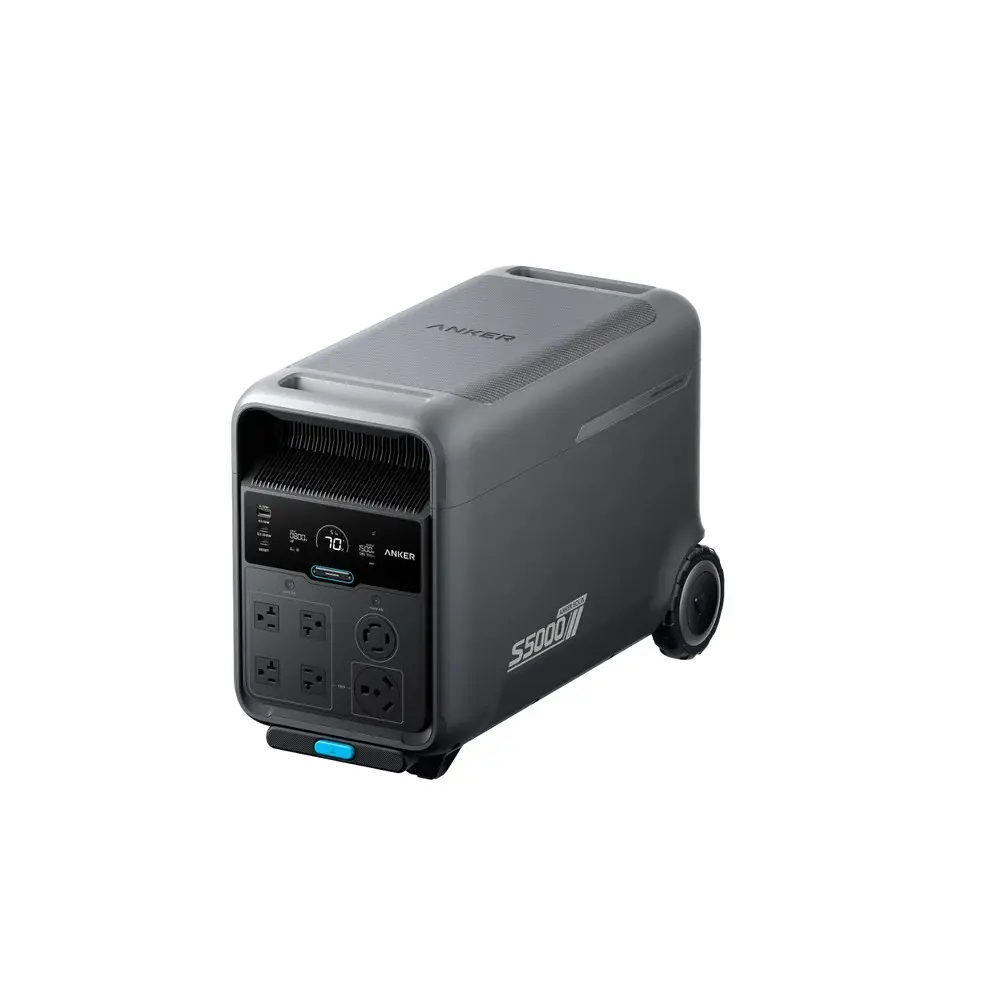

Solar generator cycle life tells you how many charge-and-discharge cycles a battery is designed to complete over its working life. The number matters because a solar generator may serve very different roles across many years, from occasional camping to regular home energy management and backup power. Yet a cycle count alone does not explain long-term value. You also need to understand what counts as a cycle, how frequently the battery will cycle, and how battery chemistry connects cycle life with years of practical service.
Read Cycle Life as a Usage Measure, Not Just a Number
One Cycle Does Not Always Mean One Charging Session
A battery cycle describes cumulative energy discharged and recharged, rather than simply the number of times someone connects a charger. Partial battery use can add together over time. For example, two periods that each represent roughly half of the battery’s usable energy can collectively amount to about one equivalent full cycle. This distinction matters for a solar powered generator that may receive frequent top-ups from solar while serving changing loads throughout the day. A user might consume part of the stored energy overnight and replenish it the following morning. Another day may involve much lighter consumption. Cycle life therefore reflects accumulated battery throughput more meaningfully than a simple count of charging sessions.
Chemistry Has a Major Role in Longevity
Battery chemistry is one of the specifications worth checking when comparing cycle-life figures. The Anker SOLIX S5000 uses next-generation 314Ah LFP cells and carries a stated rating of 10,000 cycles. Anker also gives the battery a stated 15-year lifespan. These two figures describe longevity from different perspectives. Cycle life relates to repeated battery operation, while lifespan expresses the intended service period in years. They should not be treated as interchangeable measurements. For someone choosing a solar generator for long-term ownership, reading both provides more context than focusing on capacity alone. The S5000’s 5,024Wh base capacity tells you how much energy the system stores, while its cycle specification addresses repeated use of that storage over time.
Your Routine Determines How Quickly Cycles Accumulate
A cycle rating becomes easier to understand when you connect it to an actual usage pattern. A camping household that brings out its solar generator several times per year will accumulate battery throughput differently from a home that regularly charges and discharges stored energy. Even frequent users may not complete an equivalent full cycle every day. Some days involve deeper energy use, while others require only a small portion of the battery. Solar charging can also replenish energy as loads operate. Instead of converting a cycle specification directly into a fixed number of calendar years, estimate how the system will actually operate. Frequency, energy consumption, and charging habits determine how quickly equivalent cycles accumulate across months and years.
Look Beyond the Cycle Count for Long-Term Value
Capacity Determines How Much Work Each Cycle Represents
Cycle count becomes more informative when considered alongside battery capacity. A cycle on a small battery and a cycle on a larger battery do not represent the same amount of stored energy moving through the system. The S5000 starts with 5,024Wh of capacity and supports expansion from 5kWh to 30kWh. This matters for households whose energy requirements may increase over time. A larger available energy reserve can support broader applications while the cycle specification describes repeated operation of the battery technology. Capacity expansion also gives long-term planning another dimension. Instead of treating the original battery size as permanently fixed, users can consider whether the energy system has room to grow as camping routines, backup requirements, or household energy patterns change.
Long-Term Ownership May Include Several Energy Roles
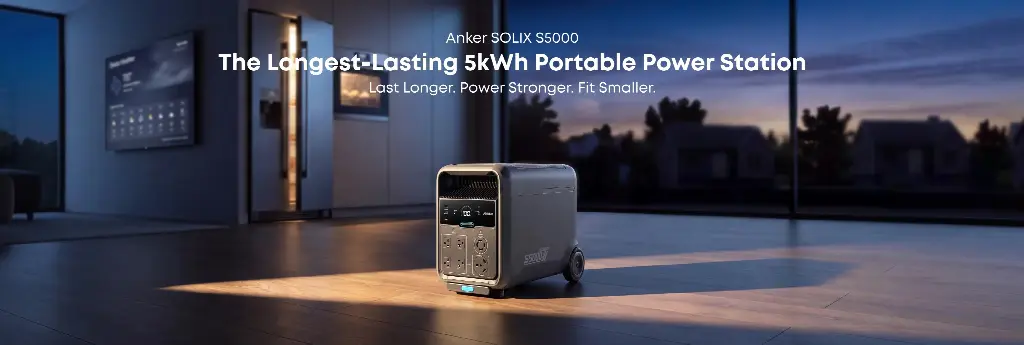
The way a solar generator is used can evolve over its service life. A unit purchased for outdoor trips may later become part of a household backup plan. Another system may support both scheduled energy management and emergency readiness. The S5000 provides 4,500W rated output and 8,000W peak output, with 120V and 240V output support. Anker also positions it for up to 48 hours of home backup under its stated scenario. These capabilities show why cycle life should be considered in relation to years of changing applications. A long-life battery is not simply repeating one task thousands of times. It may support different appliances, locations, energy schedules, and backup situations as the owner’s needs develop.
Safety and Battery Design Belong in the Same Evaluation
Cycle life is one part of battery quality, so it should sit alongside other battery and system characteristics in a purchase decision. The S5000 is UL 9540 and UL 9540A certified. Its supplied battery design information also identifies a smoke venting channel, a high-temperature mica layer, and inter-cell nano thermal insulation. These details address the physical and safety architecture surrounding the cells rather than simply adding another longevity number. When evaluating a system intended for many years of operation, buyers can therefore examine battery chemistry, cycle rating, safety certifications, capacity, and intended lifespan together. This creates a more complete picture of the energy storage system than selecting a product based on the largest cycle figure alone.
Conclusion
Solar generator cycle life becomes useful when you understand what the number represents in everyday operation. Equivalent cycles accumulate through repeated energy use, including partial discharges and recharges, while battery chemistry and individual usage patterns influence how those cycles unfold over time. Capacity, safety design, and intended service life add important context. With 314Ah LFP cells, a stated 10,000-cycle rating, 15-year battery lifespan, and expandable storage, the Anker SOLIX S5000 illustrates how cycle life fits into a broader long-term energy decision.
Also Read
- ttps://synonymlabi.com/will-an-autonomous-lawn-mower-cut-close-to-edges/
https://synonymlabi.com/top-ai-search-agencies-in-western-australia/
https://synonymlabi.com/convenient-iot-tech-and-how-it-shapes-our-lives-at-home/




Pingback: Writing Confidently in a Second Language: How Professionals Use AI Without Losing Themselves
Pingback: SEBI Registered Research Analyst: How to Verify an INH Number