


Four hours of footage on a card feels like an ocean, and most people start swimming at the first clip. The result is a timeline built in the order things were shot, which is almost never the order they should be seen. A better sequence exists: sort the files before watching anything, choose the best take of each moment, then assemble in rough blocks. It sounds slower and it saves most of a day. Speed here is not about shortcuts, it is about never looking at the same file twice for the same reason.
Sort Before You Watch
By Scene, Not by File Name
Camera file names are a sequence of numbers that mean nothing after lunch. Rename or group them by scene as the first action, before any judgement about content. A folder per scene, or a naming prefix, gives you a map of the shoot rather than a pile. This is the least creative step and the one that decides whether the next three hours are calm or chaotic, which is why sorting counts as video editing rather than preparation for it. A shoot that crosses two days also crosses two lighting conditions, and scene groups keep them apart. Two passes over the card is normal: one to sort and mark, one to choose, and neither involves the timeline. Sorting is also the moment you discover a missing shot, which is much cheaper now than after the cut. A gap found while sorting is a note for the next shoot; a gap found in the timeline is a problem for tonight.
Flags and Colours for Keepers
While you watch, mark rather than decide. A flag for anything usable, a colour for the strongest takes, and no deletion until the sequence is built. Marking is fast because it requires no comparison, and comparison is the expensive part. Come back to the marks once, with the structure in mind, and the choices take minutes instead of hours. Flags are cheap because they are reversible, which is exactly why they should be used generously. A colour for the strongest takes and a flag for anything usable keeps the two decisions separate. A bin for unusable material keeps the decisions visible without cluttering the timeline. Sorting done honestly makes the choosing pass almost boring, which is the sign it worked.
Pick the Best Take
Compare Two Reads Side by Side
When a line was said three times, put two versions next to each other and choose. Side by side beats memory, because the second version always feels better simply for being more recent. Watch the first two seconds of each and stop: the opening is where a take reveals its energy. Delete the loser from the sequence rather than from the card, so the decision can be reversed. Write the reason for the choice in the marker, so a later session does not reopen the debate. Play both reads from the same starting word, because a fair comparison needs the same beginning. If neither read is good, mark both and come back after the structure exists.
Mark the Line You Will Use
Mark the exact sentence rather than the whole take, so the assembly stage is a matter of dragging marks rather than re-listening. A marker on the phrase you want is a small investment that pays back every time you open the project again. It also makes a handover possible, since the next person inherits your judgement rather than your confusion. Marked lines also make a rough cut possible without listening to the full interview again. A marker with a note is worth three replays, and it survives the week between sessions. A marked line is also a promise to the person who shot it that the material was actually used.
Assemble in Blocks
Rough Blocks Before Fine Cuts
Build the sequence as a set of blocks, each one a beat of the story, with rough edges and gaps. Do not trim precisely yet: precision applied to a structure that will change is wasted work. Once the blocks are in an order that makes sense, the fine cuts become obvious and much faster. This is the difference between editing and rearranging. Blocks are allowed to be wrong for a while, and that permission is what makes them fast. Allow the blocks to be unequal; a long opening and a short close is a shape, not an error. Rough blocks are allowed to be uncomfortable for an hour, and that is what makes them quick.
Filling a Block That Is Short
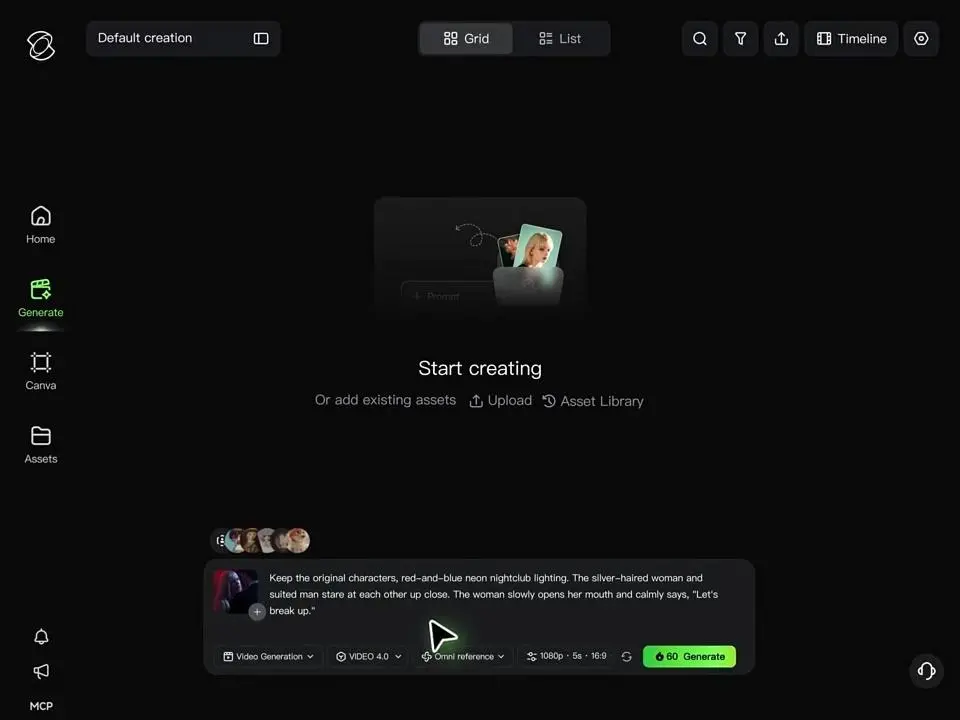
Every assembly ends up with a block that is two seconds short: a transition, a reaction, a piece of context nobody shot. The old answers were a title card, a freeze or a cutaway; the newer one is to extend what is already there, so the block keeps its rhythm and the story keeps its pace. Filling that block is the one place where material can be made rather than found. Kling AI Video Editor extends or reworks the shots on either side of the gap from a description, on Kling 4.0 repeating the passes until the two seconds are there and carrying the movement and the light across the join. Two seconds is usually a sentence, and a sentence is usually worth keeping.
Conclusion
Sort, choose, assemble: three passes with three different questions, and none of them repeated. The temptation is to do all three at once on the first clip, which is why the first clip takes an hour. Work in passes and the whole card takes an afternoon. Three passes, three questions, and a card that stops feeling like an ocean.
Also Read
- https://synonymlabi.com/top-5-data-warehouse-service-companies-in-2026/
https://synonymlabi.com/what-should-you-know-about-solar-generator-cycle-life/
https://synonymlabi.com/keeping-kinship-clear-with-a-simple-household-relationship-diagram/




Pingback: Damascus Skinner Knife with Rosewood Handle: A 6-Inch Hand-Forged Blade for Hunters
Pingback: Mobile-First Slot Architecture: Asset Bundling, Touch Ergonomics, and Math Engine Synchronization